

Glaucoma is often called the “thief of sight,” and a leading cause of permanent blindness among Black Americans. Like a thief at night, glaucoma tiptoes slowly and progresses silently until vision is lost. Blacks in the US are disproportionately affected. We experience a higher rate, earlier onset, and more severe outcomes than other races. According to the Mayo Clinic Health System and the Centers for Disease Control, Black adults are 6 times more likely to get glaucoma than white adults.
Glaucoma is a disease that damages the optic nerve, most commonly due to increased pressure inside the eye. It develops slowly and painlessly, which is one of the primary reasons it is rarely detected early, except through an eye examination. However, in its advanced stages, the consequences can be devastating and life-altering.
Whoopi Goldberg is one of many Black people living with glaucoma. Because her condition was not detected early, she has spoken openly about the intense headaches and physical strain it has caused, describing the pain as coming on “like a freight train.” Her experience underscores the reality that glaucoma is not only a disease of vision loss but one that can also affect daily quality of life.
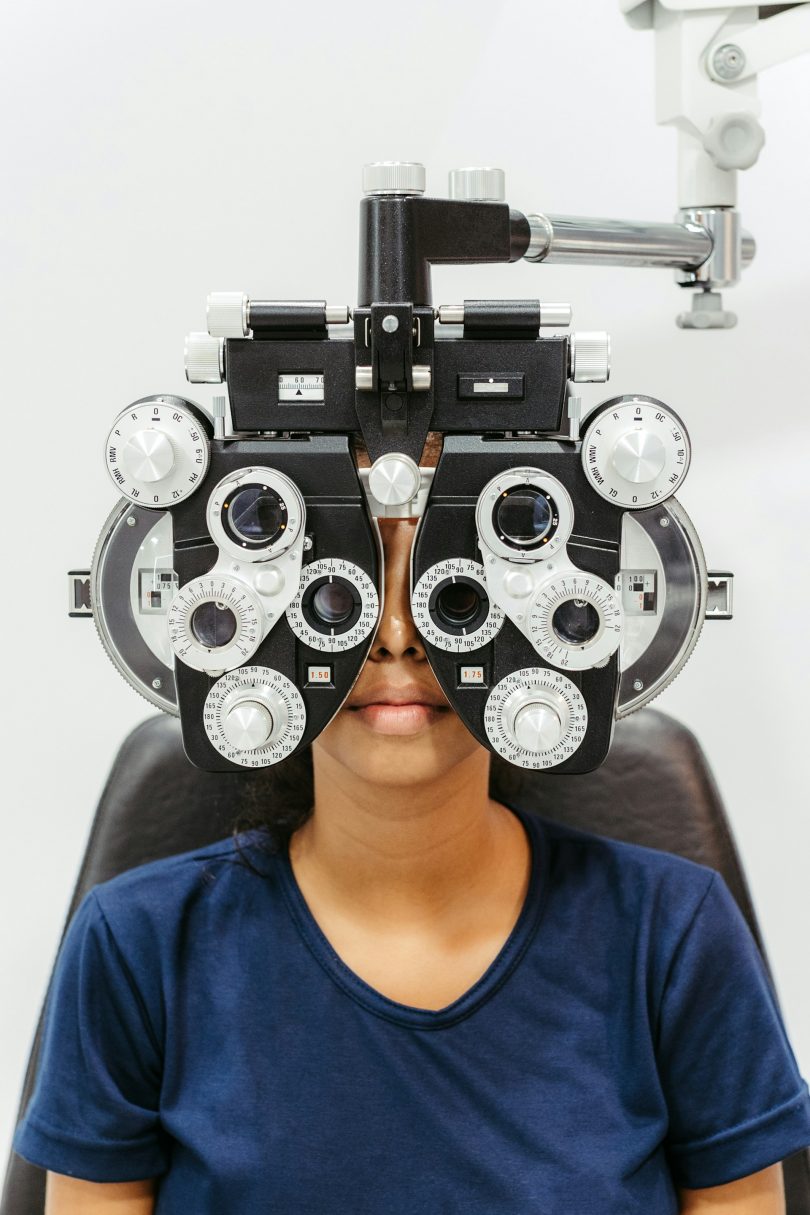
Regular eye exams and understanding why glaucoma risk is higher in Black communities are crucial steps toward keeping the sight thief out and preserving Black vision.
Why Blacks Face a Higher Risk
As early as their 40s, Black adults begin developing glaucoma at higher rates. In fact, the Glaucoma Research Foundation confirmed that Black people have glaucoma earlier in life than any other ethnic group—on average, 10 to 15 years earlier than white counterparts. What could be the reason for this? Why do we have a higher risk?
- Genetics
Data made available by Taylor & Francis reveal that certain genetic variations linked to eye pressure regulation and optic nerve vulnerability are more common in Black people than in other races. So, due to family history, the likelihood of glaucoma for many Black individuals has become inevitable, and this risk is even compounded across many generations.
- Barriers to Early Detection
Glaucoma starts earlier and progresses faster in Blacks if not detected or treated early. While a white person may be diagnosed with glaucoma in their 60s, Black individuals may begin to develop the disease in their 40s.
Hence, early detection is critical, but many people in our community face obstacles that reduce accessibility to routine eye care. Factors such as limited access to nearby eye clinics, under-insurance or lack of insurance coverage, and high cost of thorough eye exams often discourage regular checkups. Fewer community-based screening programs in some Black neighborhoods also contribute to late detection and diagnosis, which often leads to vision loss and more severe outcomes compared to people with better access to comprehensive eye care.
- Higher Rates of Related Health Conditions
Higher rates of related health conditions like hypertension and diabetes also contribute to the increased risk of glaucoma-related damage in our community. These conditions affect the blood vessels supplying the eyes and optic nerve. Hypertension may interfere with healthy blood flow to the optic nerve while diabetes can contribute to nerve damage and changes in eye pressure.
According to the American Academy of Ophthalmology, glaucoma is 16 times more likely to lead to blindness among Black people in the US when compared to white people. Hence, these health conditions, when not well controlled, can worsen glaucoma’s progression and increase the chances of vision loss.
Why Routine Eye Screening is Critical
As mentioned earlier, glaucoma is a silent thief of sight. It is there, but you will never notice it, because it has only a few early symptoms. The best way to monitor glaucoma is with a routine comprehensive exam. A routine eye check can help detect glaucoma early, giving enough time for treatment to stop its progression. Good nutrition is also essential, as it helps provide essential vitamins and antioxidants (such as vitamins A, C, and E, zinc, and omega-3 fatty acids) to protect the optic nerve and reduce inflammation. Be sure your meals are balanced with leafy greens, colorful fruits, fish, and whole foods as they constitute a balanced diet and will help reduce the risk of eye disease and improve visual function.
The most common form of glaucoma is the primary open-angle glaucoma with three basic treatments, namely:
- Eyes drops
- Laser therapy
- Surgery
Primary open-angle glaucoma is very dangerous because of how slowly it develops. To add to its danger, it is painless, making early detection of this disease almost impossible without regular eye exams.
The Centers for Disease Control and Prevention, in its Manhattan Vision Screening and Follow-up Study, and the National Institute of Health recommend the following:
- Baseline eye exam by the age of 40 for all Black adults
- Follow up exam within 1 to 2 years and more frequently for Black individuals who have high-risk factors
- Earlier screening for Blacks with a family history of glaucoma and frequent screening, just like above
Addressing Barriers to Early Detection
Systemic factors like limited access to eye care, delay in follow-up, and inadequate awareness have contributed in many ways to the terrible outcomes experienced in the Black community.
Addressing these barriers to early detection would require a multifaceted approach that addresses cultural obstacles, access to care, patient education, and financial barriers. Glaucoma Today points to limited knowledge as one of the leading barriers to early detection.
Because of this, Elevate Black Health recommends community education, affordable eye care services for members of our community, and culturally informed health outreach purposely tailored to address gaps in early detection.
Community education/awareness should focus on genetic risk, recognizing early onset, and the need for early and regular eye checkups. Glaucoma may be the silent thief, but proactive care is the watchdog that calls it out.
Further Reading:
- Mayo Clinic. Family history and ethnicity give insights into glaucoma. https://www.mayoclinichealthsystem.org/hometown-health/speaking-of-health/family-history-ethnicity-and-glaucoma
- Centers for Disease Control and Prevention. Current Glaucoma Programs. https://www.cdc.gov/vision-health/php/glaucoma-programs/index.html
- New Zealand Optics. Stars and their eyes… Whoopi Goldberg. https://www.eyeonoptics.co.nz/live-articles/stars-and-their-eyes-whoopi-goldberg/
- Elevate Black Health. The Silent Dialogue: Pain and Mental Health. https://www.elevateblackhealth.com/the-silent-dialogue-pain-and-mental-health/
- Glaucoma Research Foundation. African Americans and Glaucoma. https://glaucoma.org/articles/african-americans-and-glaucoma
- Taylor & Francis Online. Differences in optic nerve structure between individuals of predominantly African and European ancestry: Implications for disease detection and pathogenesis. https://www.tandfonline.com/doi/full/10.2147/opth.s1628
- American Academy of Ophthalmology. Many Factors Could Explain Racial Disparities in Glaucoma. https://www.aao.org/education/headline/many-factors-could-explain-racial-disparities-in-g
- Elevate Black Health. Eye Health: Diabetes and Nutrition. https://www.elevateblackhealth.com/eye-health-diabetes-and-nutrition/
- Glaucoma Research Foundation. Open-Angle Glaucoma. https://glaucoma.org/types/open-angle-glaucoma
- Department of Health and Human Services, USA. Manhattan Vision Screening and Follow-Up Study (NYC-SIGHT): Subanalysis of Referral to Ophthalmology. https://stacks.cdc.gov/view/cdc/175611/cdc_175611_DS1.pdf
- National Library of Medicine. Projected Clinical Outcomes of Glaucoma Screening in African American Individuals. https://pmc.ncbi.nlm.nih.gov/articles/PMC8075062/
- Glaucoma Today. Addressing Adherence in Glaucoma Patients. https://glaucomatoday.com/articles/2020-may-june/addressing-adherence-in-glaucoma-patients