

As we recognize American Heart Month this February, the medical community and public health advocates are sharpening their focus on a staggering reality. Cardiovascular disease (CVD) remains the leading cause of death for Black women in the United States. According to the American Heart Association, nearly half of all Black women over age 20 are living with some form of heart disease. While clinical conversations often center on salt intake and moving more, culturally specific barriers are often overlooked. Specifically, the hair care barrier is a major deterrent to fitness among Black women. The decision to step onto a treadmill is often weighed against the time, cost, and professional pressure of maintaining their hairstyle.
The Health vs Hair Paradox
A seminal study published in JAMA Dermatology highlighted a silent crisis in African American women’s cardiovascular health. About 40% of Black women have avoided exercise because of their hair or concerns related to their hair care. This logistical and economic hurdle directly impacts physical activity levels, which are a primary modifiable risk factor for heart disease and stroke.
Many Black women use heat-styling like silk presses or chemical relaxers to achieve straight textures. Due to the unique structure of coily and kinky hair, moisture from sweat causes the hair shaft to swell and revert to its natural, voluminous state. This raises several concerns for Black women before hitting the gym:
- Logistical Strain: Unlike textures that can be washed and gone, a wash-and-style routine can take the entire afternoon for a Black woman. If she exercises five days a week, the maintenance becomes a second full-time job, literally
- Financial Loss: A professional style that costs $100 and takes four hours to complete can be ruined in twenty minutes
- Tangling and Breakage: Salt from sweat can dry out the hair, leading to matting at the roots and eventual breakage if not washed immediately
- Scalp Health Issues: Avoiding washing hair after a workout to preserve a style can lead to seborrheic dermatitis and scalp inflammation due to salt and bacteria buildup
The Cardiovascular Cost of Inactivity
The CDC recommends about 150 minutes of moderate-intensity aerobic activity per week to maintain heart health. Yet, studies show that Black women are less likely to meet these guidelines than any other demographic. When asked, many Black women often lead the conversation in the salon. For a Black woman, a 45-minute workout is a logistical gamble that could result in hours of washing, styling, and maintaining the hair.
When hair maintenance leads to exercise avoidance, the biological consequences are cumulative. It could lead to increased arterial stiffness as the elasticity of blood vessels reduces. Physical inactivity also contributes to higher BMI and insulin resistance, and can lead to hypertension, which disproportionately affects Black women.
Even with the realization of the need to stay active, many Black women face the pressure of maintaining a specific professional look. For decades, professional environments have policed Black hair, labeling natural textures as unprofessional or untidy. The pressure forces many Black women to maintain high-maintenance, heat-straightened styles to navigate their careers. If a woman’s professional standing feels tied to her appearance, she is less likely to risk a frizzy look caused by a morning run. Consequently, this systemic workplace bias directly impacts the cardiovascular health of Black employees.
How to Overcome the Black Care Barrier to Physical Activity
Improving cardiovascular outcomes requires a strategy that respects the cultural and practical reality of Black hair. To bridge the gap between hair care and heart health, the narrative must shift from choosing one or the other to finding sustainable compromises. Here is how we can bridge the gap this Heart Month:
1. Transition to Low-Impact Styling
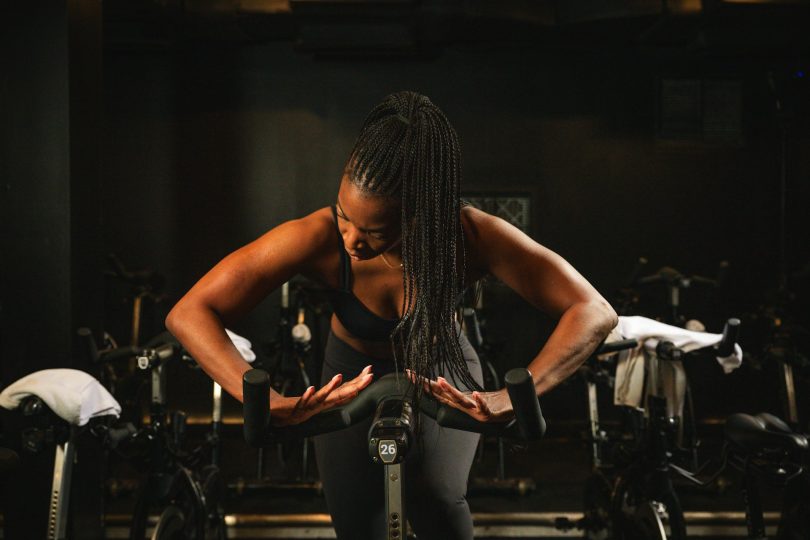
If cardiovascular health is the goal, your hairstyle should support it, not hinder it. You can opt for protective styles likebraids, twists, and locs that allow for scalp perspiration to evaporate. These are also easy to clean without requiring a full reset of the hair. Because the hair is already set, sweat does not drastically alter the aesthetic, allowing you to engage in high-intensity cardio without fear of reversion. You can also take advantage of your natural hair. By embracing wash-and-go textures with daily or frequent rinsing, you can always hit the gym without the fear of sweat ruining your style.
2. Strategic Workout Mapping
Manage your heart health around your Wash Day. You can schedule your most intense, high-sweat sessions (HIIT, spinning) in the days immediately before your scheduled hair wash. On days when you need to maintain a style, focus on low-moisture activities like resistance training or power walking in a cool environment.
3. Integrate Technology and Tools
Luckily, innovation is slowly catching up to the problem. Products like moisture-wicking headbands that keep edges flat while allowing heat to escape and dry shampoos formulated for textured hair are helping women extend the life of their styles between gym sessions.
4. Professional Advocacy
We encourage Black women to bring this topic into the exam room. If your physician suggests more exercise, be vocal about the hair barrier. A culturally competent provider can help you set realistic goals and help you work around the barrier.
Choosing Longevity Over Aesthetics
As we celebrate Healthy Heart Month, your heart is more important than your hair. We must dismantle the idea that good hair is the one that hasn’t been moved or sweated on. Instead, let’s embrace the idea that good hair is healthy hair on a healthy body. Choosing to prioritize a 30-minute walk over a perfect silk press is an act of self-love. The struggle is real, and the barriers are systemic, but the cost of inactivity is too high.
Additional Resources
- Hair Care Practices as a Barrier to Physical Activity in African American Women. https://jamanetwork.com/journals/jamadermatology/fullarticle/1485354
- Heart Disease and Stroke in Black Women. https://www.goredforwomen.org/en/about-heart-disease-in-women/facts/heart-disease-in-black-women
- Study: Doctors Don’t Realize Hair Care Prevents Many African American Women From Working Out. https://wexnermedical.osu.edu/mediaroom/pressreleaselisting/hair-care-prevents-many-african-american-women-from-working-out
- Adult Activity: An Overview. https://www.cdc.gov/physical-activity-basics/guidelines/adults.html
- Thinking of getting a protective style? Here’s EYNTK. https://www.cosmopolitan.com/uk/beauty-hair/hair/a63451822/protective-styles-guide/
- I Found the One Sweatband to Rule Them All. https://www.wired.com/story/treadbands-sweatband-rave/
- Hair care prevents many Black women from working out. https://chicagocrusader.com/hair-care-prevents-many-black-women-from-working-out/