

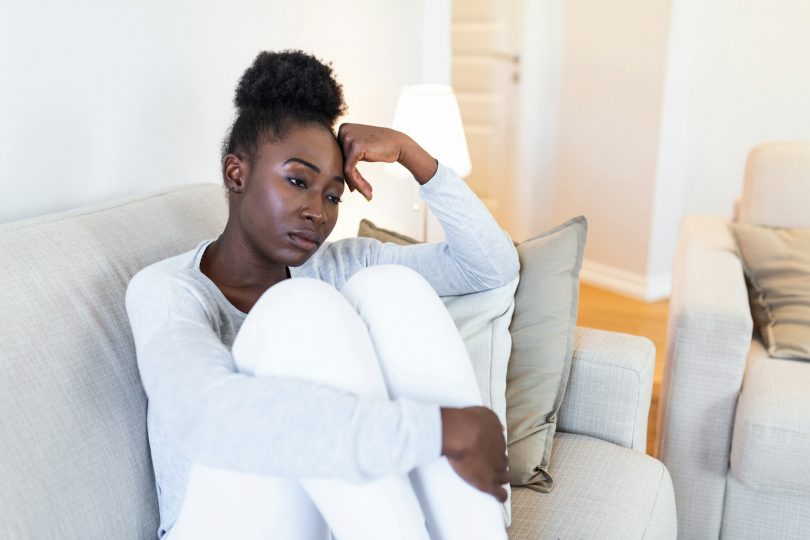

Have you ever wondered why Black communities are often hit harder by preventable diseases than others? As a Black woman deeply invested in the health of my community, especially Black women, the question has stayed with me.
A young sistah can feel perfectly healthy one moment and then be diagnosed with advanced cervical cancer the next. According to CNN, in 2022, 1.55 out of every 100,000 Black women were diagnosed with cervical cancer, compared to 0.92 per 100,000 white women. Every year, 2000 Black women receive this diagnosis and sadly, 40% do not survive.
What makes that 40% mortality rate more devastating is that these deaths could have been prevented through earlier detection, access to care, and other preventative measures. Unfortunately, this is not an isolated issue. It reflects a broader pattern affecting Black women across the United States.
The human papillomavirus (HPV), which is one of the most common STIs in the world, is responsible for nearly all cervical cancers, as well as several other types of cancer. While it affects people of all races and backgrounds, Black communities often face a disproportionate burden, including:
- Higher rates of cervical cancer
- Higher death rates from cervical cancer
- Increased cases of other HPV-related cancers, such penile, throat, and anal cancers
In 2012, the Centers for Disease Control and Prevention reported that of 33,369 diagnoses of HPV, with 21,290 cases occurring among Black individuals. Cervical cancer being higher among Black women at 9.9 cases per 100,000 compared to 7.4 per 100,000 among white women.
The path forward begins with understanding why HPV-related cancers disproportionately affect our community and recognizing how prevention, early detection, and access to care can change this story.
Healthcare Gaps Behind HPV Risks
MedRxiv identifies unequal access to organized screening programs and early detection services as a key driver of persistent HPV cases in our community. At the same time, the National Center for Biotechnology Information suggests that low vaccination rates and treatment delays are the root causes. Regardless of which explanation is emphasized, the fact remains that our people are the most affected by HPV. These systemic gaps have emboldened the human papillomavirus to affect Black women in the US without us noticing until it progresses into a more serious stage. Let’s look at why we still have higher rates:
1. Limited Access to Preventive Care
Regular screening, like Pap smears and early vaccination, has worked wonders in preventing cervical cancer. According to the World Health Organization (WHO), HPV vaccination is highly effective in preventing cervical cancer, most especially if done at an early age. However:
- Healthcare access is often limited in many Black communities in the US, which is often associated with location, cost, and insurance
- Preventive services are often underutilized due to distrust of the medical system, knowledge and information gaps, structural and access concerns, vaccine safety concerns, as well as cultural and social factors.
As a result, many Black women are more likely to have cancer detected at a late stage, when treatment becomes much more difficult. However, a report from the Cleveland Clinic Journal of Medicine suggests that the disproportionate difference between Black and white cervical cancer rates would disappear if more attention were paid to equal treatment.
2. Lower Vaccination Rate
According to the WHO, the HPV vaccine is more effective when given to girls between the ages of 9 and 14 years. But despite this:
- Awareness of the vaccine is low in many Black communities
- Misinformation and distrust of the US healthcare system are still prevalent
- Access to vaccination services is uneven across our community, with most in rural or remote areas
3. Delayed Diagnosis and Treatment
A delay in diagnosis and treatment is a serious concern. There were times the symptoms of HPV appeared, but due to:
- Lack of finance
- Lack of nearby specialists
- Systemic healthcare disparities
These have prevented many of our sistahs from getting the diagnosis and treatment that they need to stay alive.
What Makes HPV So Dangerous?
Human papillomavirus is very common, affecting most people regardless of race or gender, so that anyone could be infected. But why is it dangerous, and why should it be taken seriously?
- It often shows no symptoms.
- Some strains can quietly develop into cancer.
Surprisingly, the National Cancer Institute has linked HPV to four serious cancers, namely:
- Vulvar Cancer
- Penile Cancer
- Anal Cancer
- Vaginal Cancer
But it is not all bad news; the HPV vaccine can prevent these cancers before they even start. It can provide long-lasting protection, but it works best if one is not already exposed to the virus and is between 9 and 14 years old.
Closing the HPV Gap Through Action
The American Cancer Society Journal already states that Black women are more likely to be diagnosed with a higher-grade lesion than their white counterparts. With this higher burden, increasing vaccination rates can:
- Lead to a decrease in preventable deaths
- Close the gap in cancer outcomes
- Protect the new generation of women coming behind us
It is important to point out that this issue is not just a medical one but a health equity issue that requires urgent attention. This is why Elevate Black Health recommends that we:
- Increase awareness
- Improve access
- Build trust
- Encourage routine screening
We have lost many fights in the Black community, but it shouldn’t be about HPV, not when all the tools we need to defeat it already exist—vaccination, early screening, and education. When we use these tools to fight HPV, we are not just fighting for prevention but also for longer lives, stronger futures, and health equity.
Additional Reading
- CNN: Advanced-stage cervical cancer is rising in White and Black women in the US. https://www.cnn.com/2022/08/22/health/advanced-cervical-cancer-us-rise
- Jackson Health System: African American Women & Cervical Cancer. https://jacksonhealth.org/blog/2018-01-15-african-american-cervical-cancer/
- Centers for Disease Control and Prevention: Human Papillomavirus–Associated Cancers — United States, 2004–2008. https://www.cdc.gov/mmwr/preview/mmwrhtml/mm6115a2.htm
- MedRxiv: Cervical Cancer Screening Uptake in Africa: A Multi-Country Analysis of WHO STEPS Data, 2014–2019. https://www.medrxiv.org/content/10.64898/2026.02.27.26347296v1.full
- National Library of Medicine: HPV vaccination and screening for cervical cancer. https://www.ncbi.nlm.nih.gov/books/NBK566193/
- World Health Organization: Cervical Cancer. https://www.who.int/news-room/fact-sheets/detail/cervical-cancer
- Cleveland Clinic: Disparities in cervical cancer in African American women: What primary care physicians can do. https://www.ccjm.org/content/84/10/788
- National Cancer Institute: HPV and Cancer. https://www.cancer.gov/about-cancer/causes-prevention/risk/infectious-agents/hpv-and-cancer
- Cancer Cytopathology: Health disparities in cervical cancer: Prevalence of high-risk HPV and cytologic diagnoses according to race. https://acsjournals.onlinelibrary.wiley.com/doi/full/10.1002/cncy.22316
- Elevate Black Health: Eight Ways Health-Awareness Months Are Important. https://www.elevateblackhealth.com/eight-ways-health-awareness-months-are-important/