

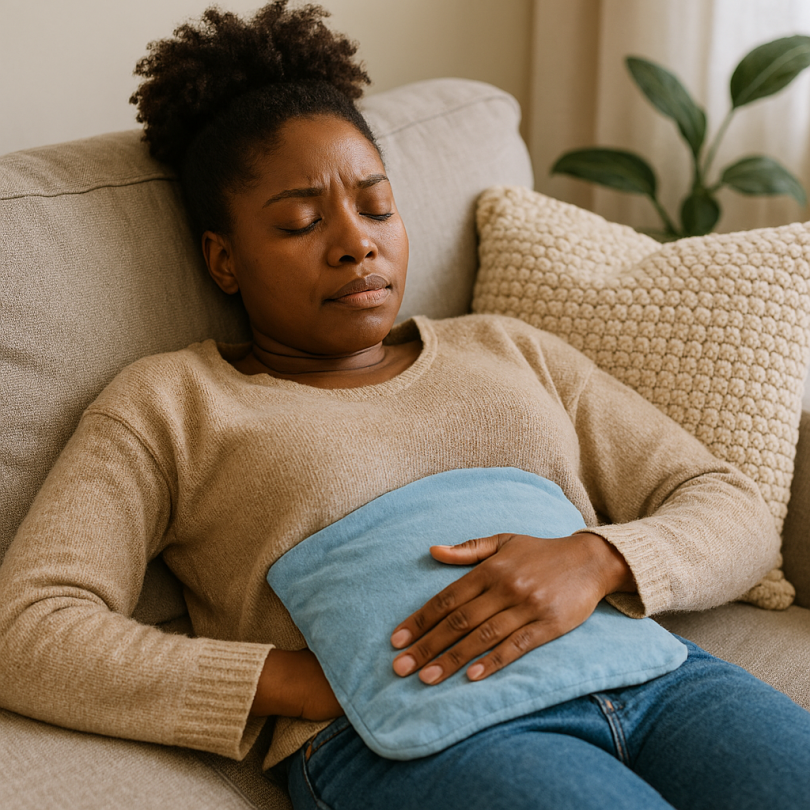

When my cousin was diagnosed with fibroids in her early 40s, it felt like someone had stolen her sparkle. Once full of energy and ambition, she started experiencing heavy bleeding, constant pain, and fatigue. What began as “just bad periods” ended with major surgery, weeks in the hospital, and a career put on hold.
A friend’s story was even more alarming. She only learned she had fibroids after severe bleeding during childbirth nearly claimed her life, forcing an emergency C-section and immediate surgery.
Two different women. Two different journeys. One shared reality.
September is Pain Awareness Month, a good time to talk about a condition too many women endure in silence: fibroids. Also called uterine fibroids, myomas, or leiomyomas, these growths are noncancerous but their impact can be devastating, especially for Black women.
Experts report that by 35, nearly half of Black women have fibroids; by 50, that number rises to 80 percent, compared to 70 percent for white women. For Black women, these growths tend to be larger, more aggressive, and more painful. Behind these statistics are the struggles of our mothers, sisters, daughters, and friends.
Let’s take a closer look at what fibroids are, their causes, and the best options for pain management.
What Exactly Are Fibroids?
Fibroids are abnormal growths comprising smooth muscle cells and fibrous tissue, developing within or on the uterus. They are common, occurring in about 20 percent to 80 percent of women of reproductive age, and 77 percent of women in their childbearing years. These growths are also the leading cause of hysterectomies and represent the most common pelvic tumor in women.
While their exact cause isn’t fully understood, they’re linked to a mix of hormonal, genetic, and environmental factors. What we DO know is estrogen and progesterone fuel their growth, and family history, obesity, diet, and exposure to certain chemicals can increase risk, according to Johns Hopkins Medicine research. Black women are disproportionately affected, developing fibroids earlier, more often, and with more severe problems.
Fibroids come in different types, depending on where they are found:
- Intramural: Common fibroids that grow within the uterine wall and could stretch the uterus
- Subserosal: Develops on the outside of the uterus (the serosa) and can become big enough to make one side of the uterus look larger
- Pedunculated: Grows on a thin stalk outside the uterus
- Submucosal: Develops under the uterine lining (myometrium)
- Cervical: Rare growths that develop on the cervix
Some fibroids are so small they go undetected, while others grow large enough to distort the uterus.
How Does One Know They Have Fibroids?
Fibroid symptoms can be challenging to identify because they develop gradually and cause pain or discomfort that is often dismissed as “normal.” Depending on their type, size, and location, some fibroids have no symptoms at all, while others cause heavy periods, severe cramps, pelvic pain, bloating, frequent urination, constipation, or back pain.
Knowing the early warning signs can help you get treatment before the growths threaten fertility or lead to a hysterectomy. Seek urgent care if you experience:
- Sharp, sudden abdominal pain that doesn’t ease with painkillers
- Heavy vaginal bleeding that leaves you lightheaded, weak, and extremely fatigued
Small, symptom-free fibroids may not need treatment, but ignoring larger ones can mean more pain, fertility problems, or emergency surgery. The key to early detection, particularly for Black women, is not dismissing prolonged abdominal pain and severe menstrual symptoms as merely part of being a woman.
Why Are Fibroids More Prevalent in the Black Community?
There’s a lot of evidence pointing to the disparity between the prevalence of fibroids in the Black community versus the white community. Women in our community experience more severe fibroid symptoms and undergo more surgeries than white women. They’re also three times more likely to be hospitalized for fibroid-related issues, are seven times more likely to have a myomectomy, and are two times more likely to undergo a hysterectomy for the removal of both the fibroids and the uterus.
The reasons for the prevalence of fibroids in our community are complex, but studies point to:
- Biological factors: Genetic differences, early menstruation, higher estrogen, and vitamin D deficiency
- Environmental factors: Chemical exposure from some hair relaxers, chronic stress, inflammation, and diet
- Systemic factors: Racism in healthcare, historical medical trauma, insurance gaps, and delayed diagnosis
These factors mean Black women need earlier detection and tailored treatments. Yet, many delay care due to cost, access issues, or past negative experiences. Some have worn the strong Black woman image like a cloak and would rather turn to family, friends, or the internet instead of doctors.
Effective Pain Management Strategies
Fibroids can cause significant pain, but there are ways to keep it from taking over your life. Remember, living with untreated pain can take a heavy toll on mental health, often leading to stress, anxiety, or depression over time.
Here are some self-care strategies to help manage fibroid-related discomfort.
- Apply Heat: Warm compresses or heating pads on your abdomen or back relax muscles and ease cramps.
- Take a Warm Bath: A warm bath with Epsom salts can melt tension and pain.
- Adjust Diet: Cut back on processed foods, refined sugar, and red meat. To help reduce inflammation, eat more leafy greens, berries, whole grains, and fatty fish.
- Try a New Sleeping Position: Lie on your side with a pillow between your knees to take pressure off your abdomen.
- Reduce Stress: Yoga, tai chi, meditation, and gentle stretches can reduce stress hormones.
- Stay Active: Walk, swim, or engage in other low-impact exercises to help improve blood circulation, regulate estrogen, and maintain a healthy weight.
- Use Pain Relievers: Over-the-counter pain relievers may also help.
- Know Your Treatment Options: If you have fibroids, there are minimal invasive procedures that can help resolve the pain. Endometrial ablation and uterine fibroid embolization (UFE) are safe and effective for destroying or shrinking fibroids. The downside is that you won’t be able to get pregnant afterwards. According to Darin Swainston MD. FACOG, treatment options vary depending on your symptoms, location, overall health, fibroid size, and whether you want to get pregnant in the future.
Moving Forward with Hope and Advocacy
Fibroids are common, but they don’t have to define your life. Black women, in particular, need better access to early detection, culturally competent care, and research that reflects our health experiences.
If you are living with fibroids, Elevate Black Health recommends that you speak up; don’t accept dismissive care or the strong Black woman stereotype. Seek second opinions, explore all treatment options, and connect with support networks. We can push for awareness, equity, and better care for all women by breaking the silence and sharing our stories.
Want to dive deeper into this topic? Check these additional resources:
- The Rising C-Section Trend Among Black Women. https://www.elevateblackhealth.com/the-rising-c-section-trend-among-black-women/
- Pain Awareness Month 2024 – U.S. Pain Foundation. https://uspainfoundation.org/painawarenessmonth/
- Uterine Fibroids – Causes, Impact, Treatment, and Lens to the African Perspective. https://pubmed.ncbi.nlm.nih.gov/36703761/
- Fibroids. https://www.hopkinsmedicine.org/health/conditions-and-diseases/uterine-fibroids
- All About Fibroids. www.healthline.com/health/uterine-fibroids#outlook
- The Fibroid Crisis in Black Women: More Work to be Done! https://www.ajog.org/article/S0002-9378(24)00739-7/fulltext
- The Burden of Uterine Fibroids for African-American Women: Results of a National Survey. https://pmc.ncbi.nlm.nih.gov/articles/PMC3787340/
- The Strong Black Woman Stereotype and Emotional Burnout. https://www.elevateblackhealth.com/the-strong-black-woman-stereotype-and-emotional-burnout/
- What Are My Minimally Invasive Procedure Options for Fibroids? https://www.lasvegasgynsurgery.com/blog/what-are-my-minimally-invasive-procedure-options-for-fibroids