

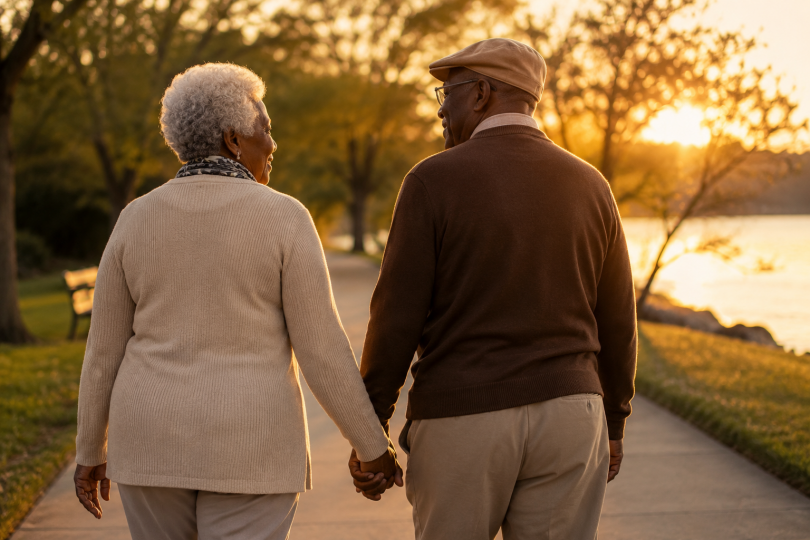

Ask most older Black individuals what their doctor discussed at their last visit and the answers are familiar. Blood pressure. Blood sugar. Cholesterol. Weight. What rarely comes up is sex, desire, or how intimacy changes over time. Few people talk about what happens to a long marriage when both partners begin to experience physical changes. Even fewer talk about how a widow makes sense of still craving closeness years after loss. These conversations are often missing, and that absence has real consequences for health and well-being.
The Centers for Disease Control and Prevention has reported a steady rise in sexually transmitted infections among adults aged 55 and older over the past decade. At the same time, older adults are among the least likely to receive sexual health counselling or testing from healthcare providers. For Black older adults, the issue is more layered. Higher rates of chronic conditions, higher levels of medical mistrust, a long history of unequal treatment in healthcare, and cultural norms that discourage open discussion about sex all contribute to this gap.
How aging changes desire and physical comfort
As people age, their bodies change in ways that directly affect intimacy. For women, menopause brings a drop in estrogen levels. This can lead to vaginal dryness, thinning of the vaginal walls, and discomfort during sex. These changes are common, yet many women are not told that treatments exist. Simple options like lubricants, moisturizers, or prescribed therapies can make a significant difference.
For men, testosterone levels gradually decline over time. This can affect sex drive and make it more difficult to maintain an erection. Conditions such as diabetes, high blood pressure, and heart disease also play a role. These conditions affect blood flow, which is essential for sexual function. Because Black men are diagnosed with these conditions at higher rates, the impact on intimacy can be more pronounced.
What often gets overlooked is that these changes do not mean the end of intimacy. They simply require adjustment. With the right information and support, many people can maintain fulfilling intimate lives. The challenge is that many never seek help, often because they believe these changes are something they must accept without question.
Why silence around sexual health still persists
In our communities, conversations about sex are private and often avoided. Privacy is valued, but it can also limit access to important information. Stigma and fear of public opinion often make older adults worry about how they will be perceived if they speak openly about their needs. Some may even feel embarrassed to talk to peers who might be going through similar experiences, leading to isolation instead of support. Others hesitate to raise these topics with healthcare providers, especially if past experiences have made them feel dismissed or misunderstood.
Healthcare systems have also contributed to the problem. Some providers assume that older adults are no longer sexually active, which leads to fewer conversations about sexual health. As a result, important issues such as infection prevention, physical changes, and emotional well-being are left unaddressed.
Trust plays a major role. Historical events, including the Tuskegee syphilis study, continue to shape how many Black patients view the healthcare system. More recent experiences of unequal treatment reinforce that hesitation. Building trust requires consistent, respectful care and a willingness to engage in honest conversations. When patients feel seen and heard, they are more likely to speak openly about their needs.
Widowhood and the need for closeness
Losing a partner changes more than daily routines. It reshapes how people experience connection. For those who have shared decades with a spouse, the absence is deeply felt. The loss is not only emotional but also physical. The simple comfort of touch, shared space, and companionship can become a source of longing.
Among older Black adults, widowhood is influenced by broader social patterns. Black women are more likely to outlive their partners and spend later years alone. While family, church, and community often provide support, they may not fully replace the closeness of a partner.
Grief is the part of widowhood that gets acknowledged. What is discussed far less is the physical dimension of loss: the absence of regular touch, of someone in the bed beside you, of the kind of closeness that builds over decades and cannot simply be replaced by phone calls or Sunday dinners.
Research from the University of Michigan found that social isolation following widowhood is associated with faster cognitive decline and higher mortality. That is a significant finding. It means that physical and emotional connection in later life is not a comfort issue. It is a health issue.
Finding connection again looks different for everyone. Some people turn to friendships or community groups. Others may explore new relationships, even if that feels unfamiliar at first. What matters is recognizing that the need for intimacy does not disappear with loss. It remains a core part of emotional health and deserves attention and care.
Intimacy in long term and new relationships
Relationships evolve over time, and aging often brings subtle shifts. For couples who have been together for many years, intimacy may become less about frequency and more about emotional connection. Small moments of closeness can take on greater meaning.
At the same time, aging can introduce quiet challenges. Physical changes, medication side effects, and lower energy levels can affect intimacy. Many couples do not talk about these changes, even when they notice them. Instead, they adapt in silence, which can create distance over time.
Research suggests that communication makes a difference. A recent AARP study found that older couples who openly discuss their emotional and physical needs report stronger relationships and better mental health. Honest conversations help partners adjust together rather than drifting apart.
For those entering new relationships later in life, the experience can bring both excitement and uncertainty. Conversations about health, boundaries, and expectations may feel difficult, but they are important. Building trust and understanding takes time, but it creates a foundation for meaningful connection.
Practical steps that support sexual health in later life
Caring for your sexual health later in life does not have to be complicated, but it does require attention and honesty. Small, clear actions can make a real difference in comfort, confidence, and overall well-being.
- Speak openly with your doctor: Do not wait for your provider to raise the topic. Be clear about any changes in desire, discomfort, or function. Ask about possible causes, including medications, and request treatment options or a referral if needed
- Take STI risk seriously: Age does not remove risk. If you are sexually active, especially in new relationships, talk to your provider about testing and protection
- Manage chronic conditions: Conditions like diabetes, high blood pressure, and heart disease can affect sexual function. Staying on top of your health through regular care, exercise, and sleep supports intimacy as well
- Explore available treatments: There are effective options such as lubricants, localized hormone therapy, medications for erectile dysfunction, pelvic floor therapy, and counseling. These are appropriate at any age
- Use trusted community resources: Organizations like the Black Women’s Health Imperative and the National Council on Aging offer guidance and support. Some community and faith groups are also creating space for open conversations
Older Americans Month is a reasonable time to say directly that older Black adults deserve that care in full. Not a version of healthcare that addresses their chronic conditions but leaves the rest of what makes up a person’s health. If you have questions about your sexual health and have not found a space to ask them yet, that is worth changing. Your doctor’s office is a reasonable place to start.
Further Reading:
- National Council on Aging.Why Is Intimacy Important in Older Adults?https://www.ncoa.org/article/why-is-intimacy-important-in-older-adults/
- Ro. What age do people stop having sex? The real statistics. https://ro.co/health-guide/what-age-do-people-stop-having-sex/
- Elevate Black Health. How to Start STI Conversations in Relationships. https://www.elevateblackhealth.com/how-to-start-sti-conversations-in-relationships/
- Better Health While Aging. How Sex Changes With Aging (& What You Can Do About It). https://betterhealthwhileaging.net/how-sex-changes-in-aging-and-what-to-do/
- The International Longevity Centre UK. How long will I love you? Sex and intimacy in later life. https://ilcuk.org.uk/how-long-will-i-love-you-sex-and-intimacy-in-later-life/