

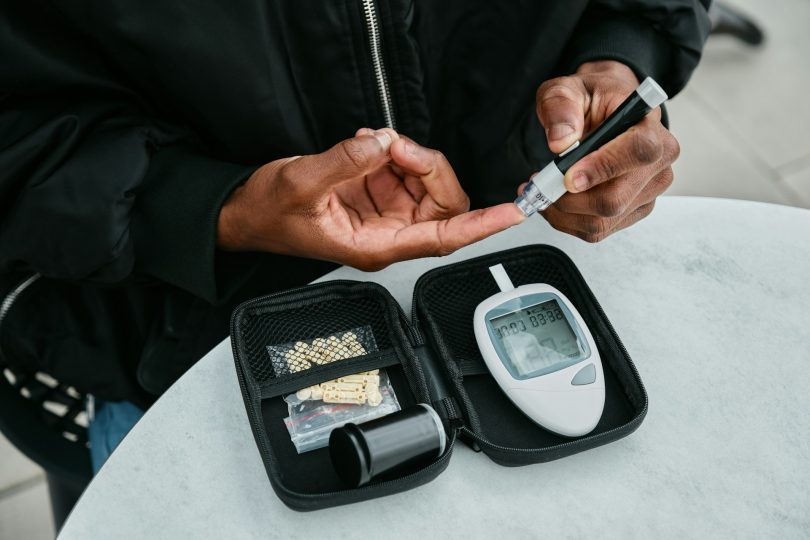

Diabetes care is built around decisions that are usually made with some degree of certainty: when to take medication, when to eat, how to monitor blood glucose and where to obtain the next prescription. A major storm can disrupt several of these at once. When that happens, taking medication on schedule, checking blood glucose, finding suitable food, and getting medical advice can become very difficult.
These disruptions matter in a country where diabetes already affects Black individuals disproportionately. In 2024, 12.4% of Black adults in the United States had diagnosed diabetes, compared with 10% of U.S. adults overall, according to the Department of Health and Human Services Office of Minority Health. In 2022, the age-adjusted diabetes death rate among Black individuals was 78% higher than the rate for the overall U.S. population. These figures do not measure the effects of disasters specifically, but they underscore why maintaining access to diabetes care during an emergency deserves serious attention.
Prepare a diabetes kit before severe weather arrives
A storm warning may leave little time to collect prescriptions, charge devices, or find missing equipment. Keeping diabetes supplies together before severe weather arrives makes evacuation, or an extended power outage easier to manage.
A portable diabetes kit should include:
- Medication and prescriptions: Insulin and other prescribed diabetes medicines, copies of prescriptions, and an up-to-date medication list
- Blood sugar monitoring supplies: A glucose meter, test strips, lancets and spare batteries, or the supplies needed for your usual monitoring device
- Backup equipment: Extra insulin pump or continuous glucose monitor supplies, along with instructions for managing your treatment if a device stops working
- Treatment for low blood sugar: Glucose tablets or another fast-acting source of sugar recommended in your care plan. Include prescribed glucagon if applicable
- Food and water: Drinking water and nonperishable foods that fit your diabetes care plan
- Medical information: Your health care provider’s contact details, medication doses, allergies and relevant device settings
A kit is only useful if you know how to use it. Ask your health care professional how to manage your medication if your usual equipment fails, particularly if you use an insulin pump. Written instructions can be handy when phone service is unreliable, or medical advice is difficult to obtain.
Keeping insulin safe during a power outage
Losing refrigeration does not automatically mean insulin must be discarded. Its safety depends on the product and the temperatures it has been exposed to. Keep these precautions in mind during a power outage or flood.
- Check storage limits: Follow the product instructions for room temperature storage and how long insulin can remain unrefrigerated
- Avoid heat and freezing: Keep insulin away from direct sunlight and excessive heat. Never let it freeze or place it directly against ice packs
- Keep the refrigerator closed: This helps it stay cool for longer during a power outage
- Seek advice if in doubt: If you are unsure how warm insulin became or how long it was exposed, consult a pharmacist or health care professional before using it
- Protect supplies from floods: Store insulin and medical equipment in waterproof containers. Have a pharmacist assess medication that has been submerged, become wet or changed in appearance
- Plan for pump failure: If you use an insulin pump, ask your health care team what backup treatment to follow if it stops working
What to do when pharmacies close and roads disappear
Before severe weather arrives, check how much medication you have and ask your pharmacist whether an early refill or emergency supply is possible.
Here is what helps most:
- Check how much medicine you have when a storm is forecast, not when the box is empty
- Ask your pharmacist whether an early refill or an emergency refill is allowed in your state
- Write down your medicines, doses, and your pharmacy and doctor numbers on paper, in case your phone dies
- Pick one person to check on you, especially if you live alone
- Plan where you would go if you had to leave, and take your kit with you
Do not assume a shelter will have what you need. Some shelters have refrigeration and some do not, so call ahead if you can, and tell staff you have diabetes when you arrive.
Why preparation is harder for many Black families
Planning takes money, time, and a safe place to store things. Not everyone has all three. A crisis finds some households faster than others.
In the Texas winter storm of 2021, a survey of 1,038 residents found that Black respondents were more likely to report power outages lasting 24 hours or longer. Researchers studying medical device users found that renters often cannot add backup power because landlords make those decisions. People who struggle most to pay energy bills are disproportionately Black or Hispanic. Those studies looked at medical devices broadly, not only diabetes, but they apply to anyone whose pump, sensor, or meter depends on household power.
Costs matter too. A spare two weeks of supplies can be hard to afford, and a job without flexible hours can leave little time to prepare.
Small steps can help:
- Tell your utility company that you depend on medical equipment. Many utilities give priority to those homes when restoring power
- Ask your doctor at your next visit for written instructions on insulin storage and what to do if a pump fails
- Ask your pharmacist about 90-day fills and refill rules
- Check on neighbors who take daily medicine or use powered equipment
The warning signs that mean you should not wait for help
It is tempting to wait for roads to reopen. Some symptoms cannot wait.
- Low blood sugar: shakiness, sweating, dizziness, and confusion. Treat with glucose tablets or another fast sugar, then recheck
- Severe low: if someone passes out or cannot swallow safely, do not put food or drink in their mouth. Give glucagon if it is prescribed, and call 911
- Diabetic ketoacidosis, or DKA: a dangerous buildup of acids in the blood that can happen when the body lacks insulin. Warning signs include vomiting, trouble breathing, and fruity-smelling breath.
- Other red flags: blood sugar that stays very high or very low, an inability to keep fluids down, or running out of essential medicine.
One step to take today
No one can predict when the next storm will hit or how long the power will stay off. You can still check your supplies, read the storage label on your insulin, and write down the phone numbers you would need if your screen went dark.
Further Reading:
- CCS Med. Staying Safe During Power Outages When You’re Living with Diabetes. https://ccsmed.com/education/staying-safe-during-power-outages-when-you-have-diabetes/
- Mayo Clinic. Diabetes management: How lifestyle, daily routine affect blood sugar. https://www.mayoclinic.org/diseases-conditions/diabetes/in-depth/diabetes-management/art-20047963
- American Diabetes Association. What are the signs of low blood glucose (hypoglycemia)? https://diabetes.org/living-with-diabetes/hypoglycemia-low-blood-glucose/symptoms-treatment
- Elevate Black Health. Faith, Fasting, and Holistic Diabetes Care. https://www.elevateblackhealth.com/faith-fasting-and-holistic-diabetes-care/