


Globally, more than 1 million people are infected by one of four curable sexually transmitted infections (chlamydia, gonorrhea, syphilis, or trichomoniasis) daily, according to the World Health Organization. In 2020, the organization estimated approximately 374 million new infections in people between 15 and 49 years with one of four curable STIs. The highest rates of infection was in the Black community. This disparity has been linked to a combination of social determinants, poor access to preventive interventions, structural barriers, and risk behaviors.
To overcome some of the barriers that increase the risk of sexually transmitted infections (STI) in our community, we must turn to an unlikely ally for assistance; modern technology. Recent advancement in technology, especially the advent of artificial intelligence (AI), is helping to reshape how STI is detected and discussed, as well as reduce shame and stigma around the conversation in Black communities.
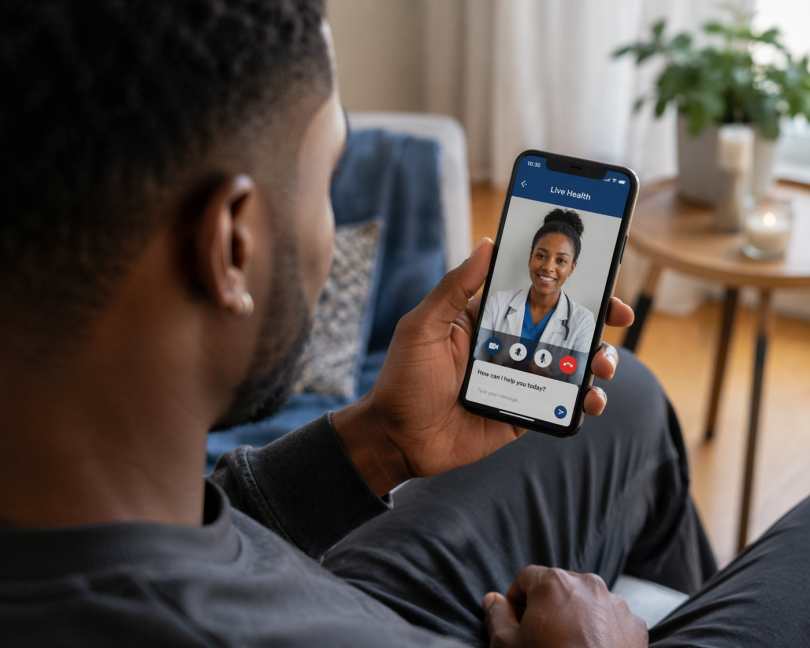
At-home testing kits, telehealth platforms, and discreet mobile apps allow members of our community to seek information, screening, and treatment. This eliminates some of the social barriers linked to clinic visits. Technological innovations also make it easier to normalize routine testing as part of overall wellness, without judgment. By increasing access, confidentiality, and culturally relevant digital outreach, technology can empower more people in our community to take control of their sexual health without fear or embarrassment.
Digital Tools for STI Prevention in Black Community
Researchers have created digital tools that overcome most of the limitations faced by previous interventions. For example, there are apps for tracking sexual behavior, partner history, and STI education to help our community better understand their risk of getting infected. Most importantly, they provide a safe space free from the stigma surrounding sex, sexual health, and STIs in our community.
Conversational AI Tools for STI Education and Prevention
Many young Black adults don’t fully understand their risk of STIs because of the stigma and communication gap in our community. AI-powered chatbots help to bridge this gap and inform young Black adults about their risks, which helps with prevention.
Pat Chatbot was created by researchers from the University of Westminster. It was designed to lower racial disparities in STI care. It is particularly tailored to promote online screening among ethnic minority groups. Other chatbots that help with STI education and prevention include Layla’s Got You and ChatGPT.
Apps to Track Sexual Behavior and STI Risk
Several studies have identified the critical role of digital resources in addressing public health challenges, especially in minority groups. Integrating these apps into health promotion initiatives will help improve health literacy and encourage preventive behaviors. The reason is that apps can combine individual, social, and societal interventions. Some of the best apps for tracking sexual behavior and STI risks include:
- Life4Me+: It is available on Android and iOS and was designed to track sexual health. It automatically reminds users to get tested for STIs and when to take medications, as well as connects patients with physicians. It was designed with a strong focus on safety, privacy, and anonymity for users. Users are not required to enter personal data during registration, meaning your identity will never be public
- HookBook: This iOS app works like a journal for users to log their sexual encounters, partner history, and track STI protection measures. It is highly useful in communities with a small sexual pool. Health-related information like testing and medication are protected in a secure, private, and personal journal. Although it allows users to back up data to the cloud, we don’t encourage you to use it because it because your personal data can become public if there is security breach
- LoveLust: This app is designed for tracking intimate encounters, personal wellness, and sexual health. Other features it offers include protection monitoring, insights into sexual patterns, and partner profiles. It is also designed around private, secure, and discreet wellness, including features like “Hide partner names” and biometric locks. Always keep your data local rather than backed u to the cloud
- Intimassy: Allows users to log more detailed data like date, partner, location, protection use type of sexual activity (e.g., anal, vaginal). It uses this data to identify patterns and potential risk exposure. While STI risk trackers includes a great deal of security features, they need accurate data input to work effectively
AI-powered STI risk prediction tools
Timely STI treatment usually leads to a more positive outcome. However, many adults in our community don’t visit healthcare facilities until the infection has advanced. This happens mostly because they don’t understand their risk level.
AI-powered predictive tools are capable of guessing a user’s risk of STIs based on a set of questions. For example, MySTIRisk is a machine learning-based tool that is used to identify high-risk subgroups for targeted testing. E-WORTH is a culturally tailored digital tool for Black women. PCheck is an mHealth app developed specifically for Black men who have sex with men to support STI prevention.
Digital Tools to Facilitate STI Testing
A combination of poverty, lack of insurance cover, stigma, and asymptomatic infections means many adults at risk of STIs or those who may have recently been infected will not know their status and will continue to spread the diseases within our community. Below are some of the digital tools that bridge the gap.
- Healthvana: The platform provides free or low-cost PrEP and STI care online for people across the country. It removes common roadblocks that prevent people from getting the care they need, including those without insurance and those in rural areas
- SMARTtest: This smartphone app facilitates HIV and syphilis self-testing. It offers users step-by-step guidance, result interpretation, and connects them to care. It was designed to make testing more accessible and private
AI-based imaging tools for STI diagnosis
Misdiagnosis is often linked to healthcare bias from non-Black healthcare providers. Imaging tools have the potential to better analyze STI lesions to offer a more accurate diagnosis.
For example, HeHealth is an AI-powered app that analyzes smartphone images of genital lesions to detect STIs like syphilis, herpes, or genital warts. This helps to improve diagnosis accessibility to underserved communities.
AI-powered tools are not meant to replace the need to schedule hospital visits. However, they can help people in our community with limited access to healthcare and resources to better plan each visit.
It is important to mention that these applications help in tracking and preventive care, but do not replace professional medical advice, diagnosis, and treatment. Likewise, it is important to have clear communications with your sexual partner, because all digital tools for risk prediction rely on accurate information to work effectively. With better sexual behavior tracking, partner management, and easier access to testing, we can lower the prevalence rates of STIs in our community, even when faced with a limited sexual pool.
For More Reading
- World Health Organization. (2025, September 10). Sexually transmitted infections (STIs). World Health Organization. https://www.who.int/news-room/fact-sheets/detail/sexually-transmitted-infections-(stis)
- Zhang, Y., Li, J., Wang, H., & Chen, X. (2023). Artificial intelligence in clinical decision support: Opportunities and challenges. Journal of Clinical Anesthesia, 87, 111091. https://doi.org/10.1016/j.jclinane.2023.111091
- Emecheta, A. (2025). Teen health: Importance of annual doctor visits. Elevate Black Health. https://www.elevateblackhealth.com/teen-health-importance-of-annual-doctor-visits/
- Johns Hopkins Medicine. (2018, March 15). Study finds large racial and ethnic disparity in world’s most common curable sexually transmitted infection. Johns Hopkins Medicine Newsroom. https://www.hopkinsmedicine.org/news/newsroom/news-releases/2018/03/study-finds-large-racial-and-ethnic-disparity-in-worlds-most-common-curable-sexually-transmitted-infection
- Khosropour, C. M., Dombrowski, J. C., Hughes, J. P., Manhart, L. E., & Golden, M. R. (2025). Increasing STI and HIV preventive behaviors and testing among men who have sex with men: A randomized controlled trial of a mobile health intervention. Sexually Transmitted Diseases, 52(4), 233–240. https://doi.org/10.1097/OLQ.0000000000002008
- Zhang, L., Chen, Y., Wang, H., & Li, J. (2025). Advances in sexually transmitted infection prevention and control: Integrating biomedical and behavioral approaches. Frontiers in Public Health, 13, Article 12617829. https://pmc.ncbi.nlm.nih.gov/articles/PMC12617829/
- Kimani, J. (2022). Safe sex for Black queens: Taking control of your health. Elevate Black Health. https://www.elevateblackhealth.com/safe-sex-for-black-queens-taking-control-of-your-health/
- Emecheta, A. (2026, January 6). Can AI detect birth defects? Elevate Black Health. https://www.elevateblackhealth.com/can-ai-detect-birth-defects/
- Shivayanga, G. A. (2022). Teen health: Navigating conversations on teen sexuality. Elevate Black Health. https://www.elevateblackhealth.com/teen-health-navigating-conversations-on-teen-sexuality/