

Age-related physiological decline in men often begins in the early to mid-thirties. Research suggests that Black men experience accelerated biological aging, meaning our bodies show signs of disease, cellular wear-and-tear, and functional decline earlier than our chronological age would suggest compared to white men. The reason is linked to chronic stress associated with racial discrimination and socioeconomic inequalities.

“It is important for us as Black men to stay active over 30,” said Kijani ‘KJ’ Wyse, a certified specialist in strength and conditioning. Wyse has been teaching the art of capoeira since 2022.
“I think it’s a misconception that we lose athleticism after a certain age. [Due to] work stress and family, men tend to put their health as last priority. A consistent training program will not only keep you at your peak for a long period but keep you youthful into your 60s and 70s.”
Stages of Age-Related Decline in Men
Age-related physiological decline is characterized by a decrease in muscle mass, bone density, and aerobic capacity. At this age, the testosterone level begins to decline at a rate of about 1% per year. Studies have shown that testosterone decline starts earlier in Black men. The timeline below shows the changes that happen with age.
- Age 30: Gradual slowdown in metabolism. Skeletal muscle mass, strength, and power start to decline
- Age 35: Testosterone levels begin to fall by about 1% annually. This affects libido, energy, and muscle retention
- Age 40: Men start losing lean body tissue and gain fat. This is often followed by a linear decline in bone density. Black men are more prone to Type 2 diabetes, hypertension, and cardiovascular disease
- Age 50: Noticeable decline in physical stamina, skin elasticity, and vision. The risk of erectile dysfunction also increases. Due to the compounding effects of chronic illness, Black men face a higher risk of late-life mobility limitations compared to men of other racial backgrounds
Although aging is a universal irreversible process, a combination of a healthy diet, adequate sleep, and regular resistance training can significantly mitigate the impact of the physiological decline that comes with it. The challenge is knowing the right exercise routine that works, especially in an online environment crowded with conflicting advice and quick-fixes.
Preventive Exercises for Men Over 30
For men over 30, the focus of preventive exercise is countering natural muscle loss, maintaining cardiovascular endurance, and preserving joint health. Exercises for men over 30 prioritize consistent functional movements (pushing, pulling, squatting, and hinging) to ‘bulletproof’ the body against age-related decline, without stressing the joints.
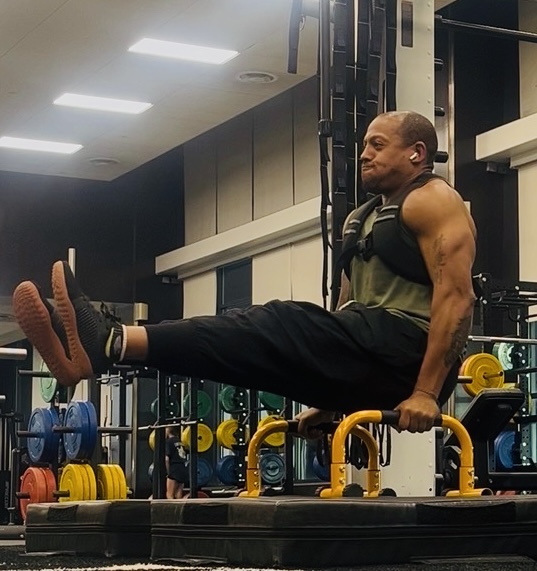
When asked which types of exercises men over 30 should prioritize, Wyse emphasized mobility, calisthenics, and resistance-band training. “What works for me and my clients who are over 30 (even 60 – 70) is mobility, calisthenics, and resistance band work. The human body is meant to be mobile. The more you work on that, the more years you will add to your youth and life.”
“Calisthenics will get the body strong without as much of the wear and tear of strictly lifting heavy weights. Mobility exercises will keep the body limber and work the ligaments and tendons often neglected. Adding a good Push/pull regimen will truly bring strength and cardio (ie, farmers walks, sled push and pulls).”
Time-efficient and joint-friendly movement routine should focus on the following core exercises.
Strength and Resistance Training (2-3 days per week)
From 30 years onward, men usually lose 3-5% of their muscle mass per decade. Regular strength training helps to support metabolism and preserve bone density. Squats and lunges, push-ups and pull-ups, and deadlifts are the most important strength and resistant trainings for men above 30.
- Squats: Stand straight with your feet slightly wider than your shoulder width apart. Squat as if you are trying to sit on an invisible chair. Lower your hips until your thighs are parallel to the floor. Return to standing position. This exercise strengthens the lower body (hamstrings and glutes) and protects the knee joints from wear and tear
- Pull-ups: Install pull-up bars on your doorway. Grab the bars with your arms fully extended. Pull your body up until your chin clears the bar without swinging your legs. This exercise builds upper-body strength and protects the shoulders
- Romanian Deadlifts: Place two dumbbells by the side of your feet. Bend at the hips while keeping a straight back to pick up the dumbbells. It strengthens the lower back, core, and prevents postural issues
Cardiovascular Health Exercise (150+ minutes per week)
High-intensity aerobic exercise is vital for heart health, stamina, and blood pressure regulation. Cardiovascular exercise is particularly important for Black men because we face a disproportionately higher burden of cardiovascular disease.
- Brisk walking: This is a moderate-intensity aerobic exercise that is faster than a casual stroll. Aim for at least 30 minutes of brisk walking per session. Walking with a friend or pets can make it easier for you to reach the 30-minute sessions goal.
- Swimming: This is a full-body workout that exercises almost every major muscle group. Swimming is highly effective for relieving stress, which is one of the primary causes of physiological decline
Many modern careers involve prolonged sitting, which can contribute to weak glutes, tight hips, and back pain. Therefore, having a structured exercise routine is an investment in your longevity. If you have made the choice to take back your life and protect your body through exercise, use the 3-3-3 rule. For example, perform squats, push-ups, and rows for 3 sets of 8 to 12 repetitions, 3 days a week.
Wyse believes the key to long-term success is focusing on small, achievable milestones rather than dramatic transformation. “The most important consideration is making sure you set many mini goals,” Wyse said. “People tend to set a huge goal, look towards the finish line, and do not accomplish the task because it is immense. My motto is 1% every day, which means take the small wins each training session, which then leads to accomplishing the total goal.”
For More Reading
- WebMD. (n.d.). What’s normal (and what’s not) as you age. WebMD. https://www.webmd.com/healthy-aging/story/what-to-expect-aging
- Emecheta, A. (2026, May). Men’s health: Testosterone decline and aging. Elevate Black Health. https://www.elevateblackhealth.com/mens-health-testosterone-decline-and-aging/
- Alonso, J., Angermeyer, M. C., Bernert, S., Bruffaerts, R., Brugha, T. S., Bryson, H., & Vollebergh, W. A. M. (2022). Global prevalence of mental disorders: Findings from the World Mental Health Surveys. Frontiers in Public Health, 10, 1000175. https://doi.org/10.3389/fpubh.2022.1000175
- Kumar, V., Abbas, A. K., Fausto, N., & Aster, J. C. (2011). Robbins and Cotran pathologic basis of disease (8th ed.). Philadelphia, PA: Saunders/Elsevier. Available at: https://pmc.ncbi.nlm.nih.gov/articles/PMC3172564/
- TEDx Talks. (2012, May 10). The power of vulnerability | Brené Brown | TEDxHouston [Video]. YouTube. https://www.youtube.com/watch?v=o5eR5ILPios&t=8s
- Emecheta, A. (2023, June). Reclaiming outdoor space with pets. Elevate Black Health. https://www.elevateblackhealth.com/reclaiming-outdoor-space-with-pets/
- Eno, G. (2023, November). Diabetes made simple: A quick guide. Elevate Black Health. https://www.elevateblackhealth.com/diabetes-made-simple-a-quick-guide/