

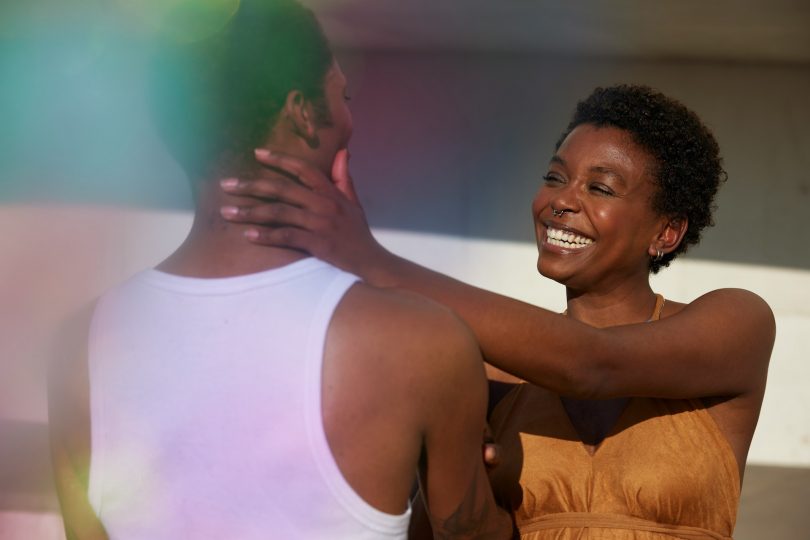

Many discussions about Black men’s health leave out important realities, thereby contributing to the one-sided support in most relationships. It is not uncommon to see one partner carrying all the emotional, physical, and mental responsibility when the other partner is sick. Recent research found that women often provide almost twice the hours of care their husbands provide when a partner is sick. That’s why this isn’t about men’s health, but a guide for women on how to support.
Men’s Health Month is an opportunity to have honest conversations about physical, emotional, and mental well-being, not just for men but also for their partners. For Black couples in the US, the conversation is even more layered. For example, many Black women place high financial expectations on Black men, and still expect them to be tough, suppress their emotions, and be self-reliant.
According to the National Institute of Health, these expectations are even compounded by systemic racism, work pressure, and internalized stigma. On the other hand, our community expects us, the Black women, to be the emotional anchor, planner, motivator, therapist, and caregiver all at once.
So, when we hear about supporting a Black male partner’s health in the Black community, often what comes to our mind as women is taking responsibility for every doctor’s appointment, every unhealthy habit, every emotional struggle, or every life decision. Should we, because of love and devotion, lose ourselves while caring for our partners?
Honestly, I believe that health support should focus on empowering our male partners to care for themselves while reassuring them that they are loved. Caregiving, on the other hand, slowly creates exhaustion, resentment, imbalance, and emotional burnout. It gets even worse during prolonged ailments.
You may be asking, how do I show up for my partner’s health without carrying the entire burden? Let’s talk.
Why This Conversation Matters
Black men in the United States are facing a unique health challenge that needs immediate attention. Studies from the Centers for Disease Control and Prevention and many others show that Black men have a higher risk of heart disease, stress-related illness, diabetes, high blood pressure, and mental health struggles. For example, the Office of the Minority Health reported in 2024 that 24% of Black adults in the US are more likely to have diabetes when compared to other ethnic groups. Sadly, 78% of Blacks die from diabetes more than the overall US population.
Despite how Black men are disproportionately affected health-wise, according to the National Library of Medicine, they are still less likely to seek preventive care or routine health care examinations.
Many factors are responsible for these, including:
- Masculinity requirement, which says all Black men need to appear strong at all times
- Distrust of the health care system
- Financial barriers
- Fear of vulnerability
- Lack of emotional safe spaces
Because of these realities, many men enter romantic relationships for emotional support, as that’s the primary place where they can feel vulnerable without being judged. While this sounds beautiful and romantic in theory, in reality, it is unhealthy when one partner manages another adult’s well-being.
During this June’s Men’s Health Month, we need to learn how to support our men’s health without sacrificing our own well-being. If you’re currently dating or in a serious relationship, this is the perfect opportunity to discuss your personal goals regarding health and future so your expectations can be more aligned.
Supporting a Partner’s Health Without Becoming His Caregiver
There is a difference between supporting a partner and taking their health as a full-time job. To be there for your partner without becoming his caregiver, you need to know the following:
1. Support is a partnership, not parenting
To be there for your partner without feeling physically or mentally drained, you have to draw the line between support and parenting. Support sounds like:
- Encouraging healthy habits
- Sharing wellness goals
- Listening without judgment
- Creating a healthy home environment
- Reminding each other to rest
While caregiving often looks like:
- Monitoring his choices (just like a parent would)
- Scheduling all his appointments
- Constantly reminding him to take care of himself
- Ignoring your own needs to manage his
- Feeling responsible for “fixing” him
What I’m saying here is not that you should be emotionally distant from your partner, but that you should build a balanced relationship where you and your partner remain responsible for each other’s growth.
2. Stop trying to be his therapist
It is okay to listen, encourage, and care deeply, but it should not go so far that you become someone’s full emotional processing center. As women, we are highly emotional beings, which is why we often fall into the role of an unpaid therapist without even knowing it.
Before you realize it, your life starts revolving around managing his stress, motivating him, and solving his problems. This imbalance eventually gets so emotionally exhausting for many partners that they often find themselves feeling frustrated and having frequent emotional outbursts.
A responsibility that is supposed to be shared among therapists, support groups, mentors, coaches, friends, pastors, and healthcare professionals is left to one partner to carry alone. There is a need to encourage others, including professionals, to help rather than absorb everything alone.
Remember, you are his partner and not his rehabilitation center.
3. Normalize preventive healthcare
“Prevention is better than cure.” Don’t wait until something becomes serious before encouraging your partner to see a doctor. And this is one of the best ways to support your partner’s long-term health. Take the following seriously:
- Eye exams
- Dental visits
- Annual physicals
- Exercise routines
- Therapy sessions
- Better sleep habits
- Blood pressure checks
- Mental health check-ins
- Healthier eating choices
4. Avoid the “Strong Black Woman” trap
Just as men are, Black women are expected to be strong in many ways. We grew up hearing that we must always be strong, nurturing, self-sacrificing, and emotionally available.
While there is nothing wrong with being resilient—in fact, being resilient is powerful—constantly carrying everyone can be self-destructive. You cannot be trying to save your partner while ignoring yourself.
Rather, you should:
- Eat better together
- Rest together
- Talk honestly together
- Exercise together
- Celebrate small wins together
If it ever gets to a point where your partner is dealing with addiction, severe depression, suicidal thoughts, chronic stress, or any major health problem, Elevate Black Health recommends that you seek professional intervention.
To learn more, do well to visit these sites:
- Journal of Gerontology. Gender differences in spousal caregiving and unmet need for care. https://pubmed.ncbi.nlm.nih.gov/8014402/
- American Journal of Men’s Health. Performing Strength: Racialized Masculinity in the Lived Experiences of Black Men at Risk of Suicide. https://pmc.ncbi.nlm.nih.gov/articles/PMC12783540/
- The Centers for Disease Control and Prevention. Interests and Preferences in Programs to Improve Health Among Men With or at Risk for Type 2 Diabetes in Racial and Ethnic Minority Groups, 2019. https://www.cdc.gov/pcd/issues/2025/24_0268.htm
- U.S. Department of Health & Human Services (Office of Minority Health). Diabetes and Black/African Americans. https://minorityhealth.hhs.gov/diabetes-and-blackafrican-americans#:~:text=In%202024%2C%20Black%2FAfrican%20American%20adults,than%20the%20U.S.%20population%20overall.
- American Journal of Men’s Health. Factors Associated With Black Men’s Preference for Health Information. https://pmc.ncbi.nlm.nih.gov/articles/PMC6414045/
- Elevate Black Health. The Silent Dialogue: Pain and Mental Health. https://www.elevateblackhealth.com/the-silent-dialogue-pain-and-mental-health/
- Elevate Black Health. Black Men and Therapy: Do we need it and why don’t we go? https://www.elevateblackhealth.com/black-men-and-therapy/
- Elevate Black Health. The Strong Black Woman Stereotype and Emotional Burnout. https://www.elevateblackhealth.com/the-strong-black-woman-stereotype-and-emotional-burnout/