

Physical exercise is critical for maintaining overall health, boosting mental well-being, and preventing chronic diseases like diabetes, heart disease, and certain cancers. Since the Black community is genetically more predisposed to several chronic diseases, maintaining a high level of physical fitness is twice as important for us.
Research data shared by the Centers for Disease Control and Prevention shows that Black men and women were less likely to meet physical activity guidelines compared to white men and women. Another study in the National Library of Medicine revealed that around 38% of Black women reported little or no participation in leisure-time physical activity, which was higher than the 23% recorded among white women.
Systemic disparities, environmental factors, and socioeconomic barriers often work together to limit our participation in fitness activities. However, one of the leading factors that is less frequently talked about is the lack of safe spaces.
Factors that Negate Safe Fitness Spaces in Black Communities
Studies have consistently shown that Black communities in the United States lack adequate, safe, high-quality, and accessible spaces for exercising. Some of the disparities have their roots in systemic inequalities. This impacts the ability of our adults to engage in regular physical fitness activities. Below are some of the factors that lower the fitness spaces available to members of our community.
Costs and Accessibility of Commercial Gyms
Specialized fitness centers or studios and wellness programs are often concentrated in suburban neighborhoods. Therefore, residents of our communities often have to travel further, attracting additional costs to the already high cost of gym membership.
On average, neighborhood gyms cost $10 – $30, commercial gyms cost ~$40 – $70 per month, while luxury clubs can cost upward of $150 per month. The relatively affordable neighborhood gyms may not be properly equipped to meet the fitness needs of our community.
Limited Green Spaces in Black Communities
Discriminatory laws of the past introduced ‘redlining’ that blocked Black adults from accessing home loans in certain areas. Also, areas with more Black residents usually received fewer city funds for tree planting and building of parks. Cities often had highways and factories run through Black neighborhoods.
The Center for American Progress report noted that Black Americans are four times more likely to live in areas with limited access to nature compared to whites. Since trees cool neighborhoods, their absence in our communities creates ‘heat islands’ because of the heat trapped by concrete. The presence of factories and highways creates pollution that further makes outdoor activities feel unsafe.
Neighborhood Safety Concerns
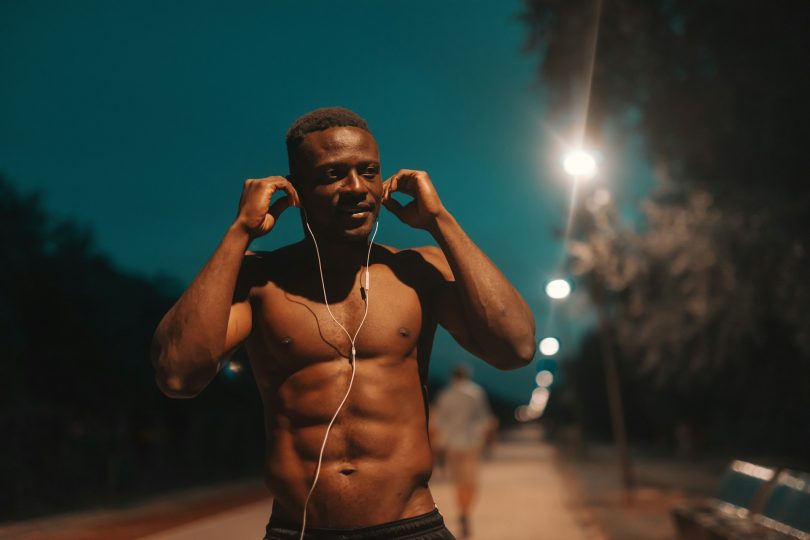
Fewer investments in predominantly Black communities have left many neighborhoods without walkable sidewalks, bike lanes, and streetlights. All these make us feel unsafe to walk or run outside, especially in the mornings and evenings—the times when most Black adults will be free from work.
Systemic racism can also be detected in the way largely Black neighborhoods are either over- or under-policed. Data shows that adults in our community are 2.8 times more likely to be killed by police than whites. This number can make it harder for our people to feel safe participating in outdoor fitness activities.
Defunding of Sports in Schools
School is supposed to be one of the safe spaces where young Black children can engage in daily exercises and build basic fitness skills they need for life. However, the defunding of sports in schools robs our children of a structured physical activity, which can lead to higher obesity rates and lower long-term fitness.
The underfunding of sports in school manifests as a lack of safe equipment or open fields and the exodus of coaches. Without these facilities and mentors, children will have nowhere to play and lose the guidance to safely do so. Defunding often leads to pay-to-play fees, which further burden Black families already facing higher poverty rates.
Guide to Finding Safe Fitness Spaces for Black Families
Finding a comfortable place to work out can be the game-changer for your fitness journey. The reason is that it is hard to focus on or adhere to your fitness routine if you are in an environment where you feel unsafe. Below are some of the ways Black families can find safe fitness spaces.
- Search for Black-owned gyms and wellness hubs: It is harder to stay motivated if you exercise alone. Working out in spaces where you are surrounded by people who look like you can boost your confidence and make fitness more fun. A simple search on the internet can help you to find Black-owned gyms, wellness centers, and yoga studios in your city
- Find culturally inclusive groups or clubs: Organizations like GirlTrek encourage Black women and families to walk together for wellness. There are also running or bike clubs led by Black fitness experts like District Running Collective. Being a part of a group will improve your sense of safety as well as motivate you to hit your fitness goals
When local fitness spaces don’t feel welcoming, Black families can create safe spaces at home. This can include engaging in fun activities on the lawn or using online videos from Black fitness trainers or fitness apps to work out in living rooms. Families who exercise outdoors should map out safe trails or tracks in their area or walk with pets to improve their safety.
For More Reading
- Zhang, Y., Li, Y., Wang, Y., & Wang, J. (2023). Artificial intelligence in healthcare: Review and prediction case studies. Frontiers in Public Health, 11, 10040374. https://doi.org/10.3389/fpubh.2023.10040374
- Center for American Progress, Hispanic Access Foundation, & Conservation Science Partners. (2020, July 21). The nature gap: Confronting racial and economic disparities in the destruction and protection of nature in America. Center for American Progress. https://www.americanprogress.org/issues/green/reports/2020/07/21/487787/the-nature-gap/
- Elgaddal, N., Kramarow, E. A., & Reuben, C. (2022). Physical activity among adults aged 18 and over: United States, 2020. NCHS Data Brief, (443). Hyattsville, MD: National Center for Health Statistics. https://dx.doi.org/10.15620/cdc:120213
- Emecheta, A. (2025, May 10). Reclaiming outdoor space with pets. Elevate Black Health. https://www.elevateblackhealth.com/reclaiming-outdoor-space-with-pets/
- Eno, G. (2024, December 15). Ending the year right with fitness goals. Elevate Black Health. https://www.elevateblackhealth.com/ending-the-year-right-with-fitness-goals/
- Ferraro, K. (2025, September 10). Gym membership prices: Cost comparison of every major brand. Truemed. https://www.truemed.com/blog/gym-membership-prices
- Katz, D. L., Doughty, K., & Ali, A. (2017). Cocoa and chocolate in human health and disease. Antioxidants & Redox Signaling, 27(10), 276–292. https://doi.org/10.1089/ars.2016.6759
- Mapping Police Violence. (n.d.). Mapping Police Violence. Retrieved July 1, 2026, from https://mappingpoliceviolence.org/
- U.S. Environmental Protection Agency. (2025, September 2). What are heat islands? U.S. Environmental Protection Agency. https://www.epa.gov/heatislands/what-are-heat-islands