


Loving someone who is ill can be very frightening, and taking care of such a person comes with physical and emotional exhaustion. You have to live it to understand how draining it can be.
Helping a loved one manage diabetes is a huge responsibility. You’ll need to worry not only about their blood sugar but also about what they eat, when and how much they eat, whether they remember to take their medication, and what might happen if they ignore the laid-out rules for managing their condition.
You love them and want them to live as long as possible and be healthy. For this reason, any decision that appears to put their health at risk can feel personal.
So, you remind them to check their blood sugar, and when you are not around, you don’t fail to set a reminder so they remember. You question their food choices and assume almost everything they eat isn’t healthy. In most cases, you take charge of getting groceries and reprimand them when they buy soda or anything that shouldn’t be part of their diet. Nothing misses your vigilant eyes, not even the portion of rice on their plate.
You don’t stop there—you ask whether they’ve taken their medication, sometimes several times a day. This can be quite overwhelming for your loved one, and they’ll start to oppose your constant questions and monitoring, which will likely offend you.
Yes, your actions come from a place of love. But what happens when care begins to feel like surveillance?
When concerns start to look like control, it becomes diabetes policing. The American Diabetes Association, in its findings, said that policing a loved one with diabetes has negative psychological effects on them. Let’s break it down.
Dinner Table Becomes a Courtroom
For many people living with diabetes, the challenge is not limited to managing blood sugar levels, appointments with the doctor, medication, and dietary recommendations. One must still manage family members’ reactions on good days and bad days.
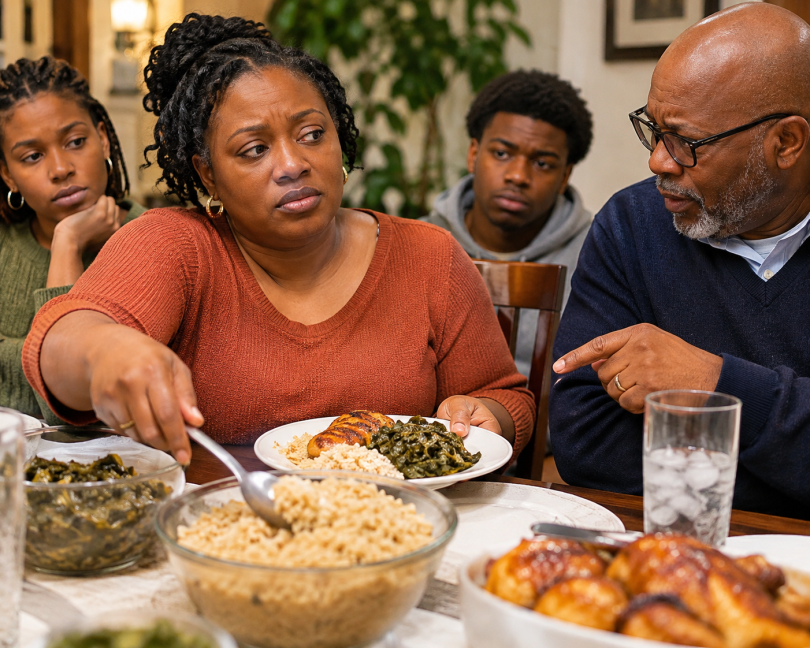
Imagine this with me: You are a woman, rice is one of your favorite foods, and you are at the dining table eating it with your family. You reach for a second serving of rice, and before you can take a bite, your husband asks, “Are you sure you should be eating that?”
You pause to process the question. Your plate becomes the subject of discussion, your food choices questioned, your portion size examined. Before you can form a response, one of your children says, “Mom, there could be complications if your blood sugar rises.”
I have no doubt those questions and statements come from genuine worry. However, these constant criticisms, questioning, and anxiety around food choices can lead to emotional stress. CDC research reveals that stress hormones can cause blood sugar levels to spike unpredictably. Hence, in a bid to help protect their health, your approach could make it more difficult to effectively manage their condition, and could lead to diabetic coma.
Mayo Clinic reports that a diabetic coma is a life-threatening disorder that can lead to unconsciousness. Family members may have witnessed your distress when you hit a dangerously high blood sugar level and believe that keeping a close eye on meals can help prevent diabetic coma. Who wouldn’t, when the diabetes death rate among Blacks in the US is roughly 78% when compared to the rest of the US population?
However, gradually, the dinner table no longer feels like a place where family members eat and bond through food, which has been the norm in the Black community for generations. Rather, it becomes a courtroom where family members are the prosecution and the person with diabetes is the accused.
In some cases, it can extend even to her wanting to reach for a piece of cake at a birthday party, order a meal at a restaurant, or prepare one of her beloved Soul Foods she has enjoyed all her life. Meals should be something to enjoy, not an opportunity for someone to comment about her health.
Psychology Today reports that food policing leads to preoccupation, anxiety, and loss of connection to the body of a person living with diabetes.
This is not to say monitoring your sick loved one is unimportant or that nutrition is not necessary. Still, it should be addressed through appropriate medical guidance rather than constant criticism from families.
Help Without Undermining Someone’s Independence
Reducing diabetes policing is not about becoming indifferent to the health of your loved one who has diabetes. It means replacing the questions, monitoring, corrections, and criticism with meaningful support. Here are a few things you can do:
1. Respect agreed boundaries.
If a loved one asks you not to comment on their food, respect it. If you have genuine safety concerns, discuss them later and agree on how to handle them.
2. Ask before offering advice.
Don’t let every meal, medication, or glucose reading become an opportunity for you or other family members to give long lectures. Instead, a simple ask before offering advice gives the person with the condition a chance to choose what support they prefer and how it should be offered. According to Beyond Type 1, if you give them a choice, they may open up about something you didn’t know they needed.
3. Offer practical help instead of constant reminders.
Instead of lectures and unsolicited advice, offer practical support like preparing a meal, getting supplies, joining your loved one in lifestyle changes, or even accompanying them to a doctor’s appointment if they’d like.
4. Stop turning numbers into judgment.
A glucose reading is information. It is not the same as character. Instead of being judgmental and treating a glucose level as evidence of a loved one’s personal failure, encourage them to discuss it with a health professional.
5. Make room for ordinary life.
Because your loved one has diabetes doesn’t mean that every conversation should be centered on diabetes, as this can lead to worry about being misunderstood or judged. Instead, talk about interests, ambitions, relationships, and everyday experiences.
Loving a family member with diabetes shouldn’t make them feel like they are having another complication. They should not have to choose between being respected in their own homes and managing their ailment.
At the end of the day, you should know that we cannot love someone into better health by making them feel inadequate. At Elevate Black Health, we believe that real support comes with dignity, freedom, and confidence to take care of themselves.
To Learn More:
- Elevate Black Health. Diabetes Made Simple: A Quick Guide. https://www.elevateblackhealth.com/diabetes-made-simple-a-quick-guide/
- American Diabetes Association. Dealing with the Food Police. https://diabetes.org/health-wellness/mental-health/dealing-with-food-police
- MD For Lives. Living With Diabetes: Challenges of Long-Term Management. https://mdforlives.com/insights/patients-and-caregivers/diabetes-weight-and-metabolic-health/living-with-diabetes-what-makes-long-term-management-harder/
- Centers for Disease Control and Prevention. Diabetes and Mental Health. https://www.cdc.gov/diabetes/living-with/mental-health.html
- Mayo Clinic. Diabetic coma – Symptoms and causes. https://www.mayoclinic.org/diseases-conditions/diabetic-coma/symptoms-causes/syc-20371475
- Office of Minority Health. Diabetes and Black/African Americans. https://minorityhealth.hhs.gov/diabetes-and-blackafrican-americans
- Elevate Black Health. Is Our Soul Food to Blame for Diabetes? https://www.elevateblackhealth.com/is-our-soul-food-to-blame-for-diabetes/
- Psychology Today. How the Food Police Shape Our Eating and How We Can Break Free. https://www.psychologytoday.com/us/blog/body-image-and-stigma-bias/202511/how-the-food-police-shape-our-eating-and-how-we-can-break
- Elevate Black Health. Eye Health: Diabetes and Nutrition. https://www.elevateblackhealth.com/eye-health-diabetes-and-nutrition/
- Verywell Mind. Talking to Loved Ones About Your Diabetes—Without Feeling Judged. https://www.verywellmind.com/talking-to-loved-ones-about-your-diabetes-11969081
- Beyond Type 1. 6 Things Doctors Should Say to Patients with Diabetes. https://beyondtype1.org/doctors-talking-to-diabetes-patients/