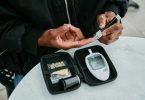



I was one of those people who used to think that only overweight people could have diabetes. Anyway, that was until I met someone slim, pretty, always beautifully dressed, appeared perfectly healthy, but had diabetes. How could someone with no visible protruding belly, no obvious signs of ill health, and, as far as my eyes could see, no reason whatsoever for having such a chronic condition?
The lady was just as shocked as I was when she received the diabetes diagnosis.
While this is common knowledge in the scientific world, many Black people still don’t know that pretty, thin people can have diabetes. This fact is proven by Geisinger, Avant Medical Group, Freedom from Diabetes, and Banner Health, among others.
Our reaction to slim people being diabetic is almost predictable: How can Miss A have diabetes? It’s not like she is obese and pale.
Statements like this reveal dangerous misconceptions about health among Blacks. We often assume that what we see on the outside tells us everything that is happening inside the body. News flash: it doesn’t.
Diabetes has no affinity to any particular shape. It does not exclusively affect people who are overweight and definitely doesn’t spare the slim people. As such, it doesn’t discriminate against discriminate based on the level of attractiveness either.
This is a big problem in the Black community. Not just because we misunderstand diabetes, but because this type of assumption has prevented many slim Black people from seeking medical care, even though they have elevated blood glucose levels that require medical attention.
Diabetes Does Not Discriminate by Appearance
According to the American Diabetes Association, Black people experience a 12% diabetes diagnosis rate, which makes us 60% more likely to be diagnosed with diabetes when compared to whites, regardless of our body size.
Because many assume that they are too young, too thin, too attractive, or too physically active to be diagnosed with this serious chronic condition, they tend to dismiss warning signs, skip routine checkups, and procrastinate testing until the situation becomes complicated.
Type 2 diabetes occurs when the body cannot use insulin properly or fails to produce enough to keep blood glucose balanced. This can happen in both slim and overweight people. No doubt, excessive weight is a risk factor, but it is only the tip of the iceberg. Other factors also come into play, including:
- Genetics
- Family history
- Age
- Physical activities
- Certain medical conditions
Type 1 diabetes, on the other hand, is an autoimmune condition in which the immune system attacks insulin-producing cells in the pancreas. Like type 2, type 1 doesn’t discriminate based on weight, age, or beauty, and, contrary to popular belief, it isn’t caused by eating too much sugar.
It is important to make this distinction, as oftentimes when we talk about diabetes in our community, it is usually focused almost entirely on obesity, another complex disease affecting up to 42.4% of Blacks. These statistics leave slim or normal-weight people, who are the majority and make up over 50% of our population, with the impression that they are not likely to have diabetes.
The Warning Signs You Should Not Ignore
Diabetes can only be confirmed through testing, and I am not talking about the type of testing we do using a mirror. While it is not a bad thing to look after our appearance as women, maintain a healthy weight, eat well, and exercise, testing is the only way of determining whether you have diabetes or not.
If you notice these symptoms, it is time to go for a test instead of second-guessing:
- Increased hunger
- Persistent fatigue
- Blurred vision
- Frequent urination
- Unusual thirst
- Recurrent infections
- Unexplained weight loss
- Slow-healing wounds
Having these symptoms does not automatically mean you have diabetes, but they are signs that tell you to act as quickly as possible. Others do not notice any symptoms at all; hence, only a routine medical checkup can confirm diabetes.
Why We Wait Until It Is Too Late
Physical appearance plays a vital role in testing for diabetes among many Black people. We usually wait until something feels seriously sick before we decide to do something about it. But beyond appearance, other factors have added to the delay in getting tested:
1. Cost.
Medical appointments can be very expensive. Considering the multidimensional poverty among Black people, which is put at 18.8%, which is the highest in the US when compared to other races, many people will either keep postponing testing or not consider it at all, even when they know they have a family history of diabetes. Their consolation could be, “Oh! I am slim; I have nothing to worry about.”
2. Fear.
Fear is another serious factor preventing people from getting tested. Many fear what the result will reveal. But diabetes is not a death sentence. It can be managed with the right treatment, medication, nutrition, and lifestyle changes.
3. Access.
Black people in the US for generations have faced severe and systemic disparities that limit medical testing, including diabetes testing. It is quite surprising to discover that up to 70% of Blacks are uninsured.
While being slim doesn’t rule out diabetes, cost, fear, and access have played a vital role in making slim, attractive, and physically active people stay away from getting tested, even though their symptoms point to diabetes.
At Elevate Black Health, we encourage every Black person to know their health status. We also advocate for addressing other stumbling blocks with the help of the stakeholders in our community.
Pretty, thin, and diabetic aren’t contradictory. Rather, they are a reminder that illness doesn’t always announce itself through appearance. So, the best you can do for yourself is to have yearly physical exams. If you are concerned about insurance or cost, call your local Department of Health and ask for free or low-cost options that may be available.
For Further Reading:
- Elevate Black Health. Diabetes Made Simple: A Quick Guide. https://www.elevateblackhealth.com/diabetes-made-simple-a-quick-guide/
- Geisinger: Can a Thin Person Get Type 2 Diabetes? https://www.geisinger.org/health-and-wellness/wellness-articles/2025/10/22/20/03/can-a-thin-person-get-type-2-diabetes
- Avant Medical Group: Can Skinny People Get Diabetes? Understanding the Risks and Causes. https://www.avantmedicalgroup.com/can-skinny-people-get-diabetes-understanding-the-risks-and-causes/
- Freedom from Diabetes: Why Thin People Get Diabetes: 3 Hidden Reasons Explained. https://www.freedomfromdiabetes.org/blog/post/hidden-truths-about-diabetes-in-thin-people/5238
- Banner Health: Why You Don’t Need to Be Overweight to Be at Risk for Diabetes. https://www.bannerhealth.com/healthcareblog/teach-me/why-you-do-not-need-to-be-overweight-to-be-at-risk-for-diabetes
- Elevate Black Health. Faith, Fasting, and Holistic Diabetes Care. https://www.elevateblackhealth.com/faith-fasting-and-holistic-diabetes-care/
- American Diabetes Association: Statistics About Diabetes. https://diabetes.org/about-diabetes/statistics/about-diabetes
- Office of Minority Health: Obesity and Black/African Americans. https://minorityhealth.hhs.gov/obesity-and-blackafrican-americans
- Elevate Black Health. Is Type 3 Diabetes Real? https://www.elevateblackhealth.com/is-type-3-diabetes-real/
- U.S. Census Bureau: Inequalities Persist Despite Decline in Poverty For All Major Race and Hispanic Origin Groups. https://www.census.gov/library/stories/2020/09/poverty-rates-for-blacks-and-hispanics-reached-historic-lows-in-2019.html
- Elevate Black Health. 5 Game-Changing Techs in Diabetes Management. https://www.elevateblackhealth.com/5-game-changing-techs-in-diabetes-management/
- Elevate Black Health. Is Our Soul Food to Blame for Diabetes? https://www.elevateblackhealth.com/is-our-soul-food-to-blame-for-diabetes/
- U.S. Department of Health and Human Services: Advancing Better Health Through Better Understanding for Black and African American Communities: Health Literacy, Health Care Access, and Culturally Appropriate Care 2024 Reading List.https://www.hhs.gov/black-history-month/reading-list/index.html