

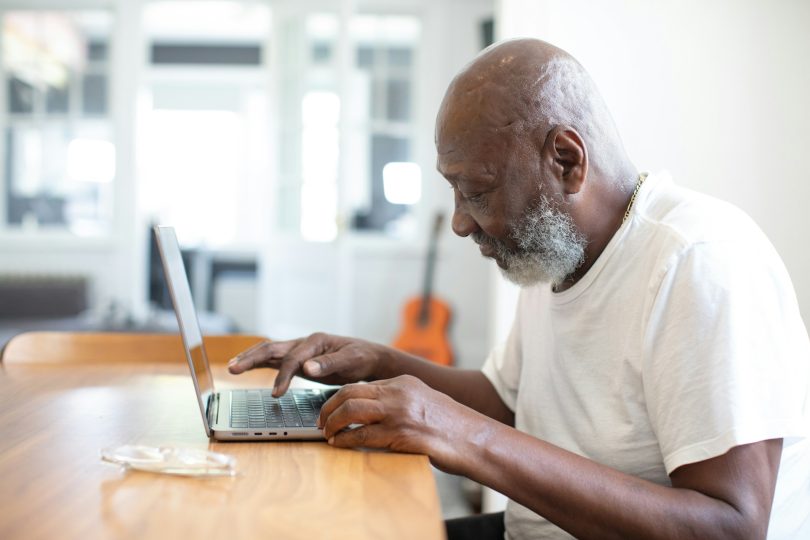

Healthcare has changed rapidly in recent years. For many older adults, healthcare no longer begins when they walk into a doctor’s office. It may begin with a patient portal, a text message, a smartphone app, a video appointment, or an online form. These tools can make care faster and more convenient, but they can also create another barrier for people who do not have reliable internet, appropriate devices, or the confidence to use them.
The gap is particularly important for older Black adults. In a 2025 qualitative study of 147 Black adults ages 55 to 84, participants described both the potential benefits and frustrations of telehealth. Limited accessibility, digital health literacy, concerns about discrimination, distrust, and poor patient-provider communication all affected their experiences with healthcare.
The problem is not simply whether someone owns a smartphone. Digital health now requires people to navigate increasingly complex systems, sometimes while managing chronic illness, hearing or vision changes, limited income, or other challenges that can make technology harder to use.
How Digital Healthcare Became Part of Everyday Care
The shift toward digital healthcare accelerated during the COVID-19 pandemic and has continued. Virtual appointments, patient portals, online scheduling, electronic prescription services, and automated messages are now common parts of healthcare.
These tools can be useful, particularly for people who have difficulty traveling or live far from a medical facility. But using them often requires several steps that healthcare providers may take for granted.
A patient may need to create an account, remember a password, complete multi-factor authentication, download an application, navigate a patient portal, or use a camera and microphone for a virtual appointment. For someone unfamiliar with these systems, even a simple medical task can become frustrating.
Why Internet Access Alone Does Not Guarantee Digital Healthcare Access
It is easy to describe the digital divide as a lack of computer literacy. That explanation misses much of the problem.
Some older adults have limited access to reliable broadband or cannot afford a suitable device. Others may have a smartphone but limited data. Vision changes, hearing loss, reduced dexterity, or difficulty processing complicated instructions can also make digital platforms harder to use.
Research supports this concern. A 2026 study of U.S. adults aged 65 and older found that 31.4% used telehealth in 2024. Video use was associated with higher income, previous experience with health technology, and the ability to use applications without assistance.
Another study found that only about two-thirds of older adults were considered ready for video-based telerehabilitation. Readiness was lower among people experiencing financial strain, those living in rural areas, and Black and Hispanic older adults.
These findings point to an important distinction: having technology is not the same as being able to use it effectively.
Why Digital Barriers Can Hit Older Black Adults Harder
Digital access does not exist separately from other social conditions that influence health. Black older adults are more likely to live with chronic conditions that require regular medical care, including high blood pressure, diabetes, heart disease, and kidney disease. When healthcare systems move essential services online, difficulties with technology can interfere with appointments, medication refills, test results, and communication with clinicians.
Research involving older Black adults has identified several factors that influence telehealth use, including accessibility, health literacy, previous experiences with healthcare, and concerns about losing the personal connection associated with in-person care.
For someone who already feels uncomfortable navigating the healthcare system, another digital barrier can make the process even more difficult.
There is also a question of independence. An older adult who cannot navigate a patient portal may have to ask a child, relative, friend, or caregiver to manage medical information. While support can be valuable, having to depend on another person for routine healthcare tasks can affect privacy and personal autonomy.
How Healthcare Systems Can Make Digital Care More Accessible
The responsibility for solving this problem should not fall entirely on older adults. Healthcare organizations also need to examine how their systems are designed, taking into account the demographics they serve, including age, race, socioeconomic circumstances, and access to electronic devices. They should also consider the user experience when developing digital platforms and simplify processes based on patients’ needs, abilities, and access to technology.
If an appointment can only be scheduled online, a patient without reliable internet has fewer choices. If important information is delivered exclusively through a portal, someone who rarely uses the internet can easily miss it. Digital systems should therefore complement traditional forms of communication rather than eliminate them.
Healthcare providers can:
- Maintain telephone and in-person options for patients who need them
- Provide clear instructions before virtual appointments
- Offer staff assistance for patients struggling with digital platforms
- Use simple language and straightforward navigation
- Make websites and portals accessible to people with vision, hearing, or mobility limitations
- Ask patients how they prefer to receive important information
- Provide interpreters and translated information when needed
A patient should not have to become highly skilled with technology before being able to access basic healthcare.
Practical Ways Older Adults Can Make Digital Care Easier
Older adults should not have to become technology experts to receive healthcare. Still, a few practical steps can make digital care easier.
- Ask for help without embarrassment: A trusted family member, friend, caregiver, community organization, librarian, or healthcare worker may be able to help with device setup or a patient portal
- Ask whether an alternative is available: If a video appointment is difficult, ask whether a telephone visit or in-person appointment is possible. Telehealth is a tool, not a replacement for every form of care
- Keep a written record of important information: Write down passwords and appointment details in a secure place rather than relying entirely on memory or a single device.
- Tell your healthcare team what is difficult: If small text, poor hearing, confusing instructions, or complicated portals are creating problems, say so. These are healthcare-access issues, not personal failures
- Be cautious with health information online: A search engine or social media post is not a substitute for medical advice. Before acting on health information found online, discuss it with a healthcare professional who knows your medical history
Making Digital Healthcare Work for Everyone
Digital healthcare is not inherently a problem. In many cases, it can make healthcare more accessible, reduce unnecessary travel, and help patients stay connected with their care teams.
The challenge is making sure those benefits are available to people with different incomes, abilities, levels of digital experience, and access to technology.
For older Black adults, that means recognizing that digital exclusion can add another layer to existing health disparities. A patient should not miss care because an online system is confusing, unreliable, or inaccessible.
Healthcare is becoming more digital, but it should not become less personal or less accessible in the process.The best systems will give patients choices. They will use technology where it helps, preserve human assistance where it matters, and recognize that convenience looks different from one patient to another.
Further Reading:
- HealthTech. Understanding the Digital Health Divide’s Role in Healthcare Access. https://healthtechmagazine.net/article/2026/07/the-digital-health-divide-in-healthcare-perfcon
- Johns Hopkins Bloomberg School of Public Health. Bridging the Digital Divide in Health Care: A New Framework for Equity. http://publichealth.jhu.edu/2025/bridging-the-digital-divide-in-health-care-a-new-framework-for-equity
- ENTtoday. Closing the Digital Divide: Ensuring Patients Have Access to Healthcare Technology Is a Priority. https://www.enttoday.org/article/closing-the-digital-divide-ensuring-patients-have-access-to-healthcare-technology-is-a-priority/?singlepage=1
- Elevate Black Health. Faith and Spirituality in Aging Well. https://www.elevateblackhealth.com/faith-and-spirituality-in-aging-well/