

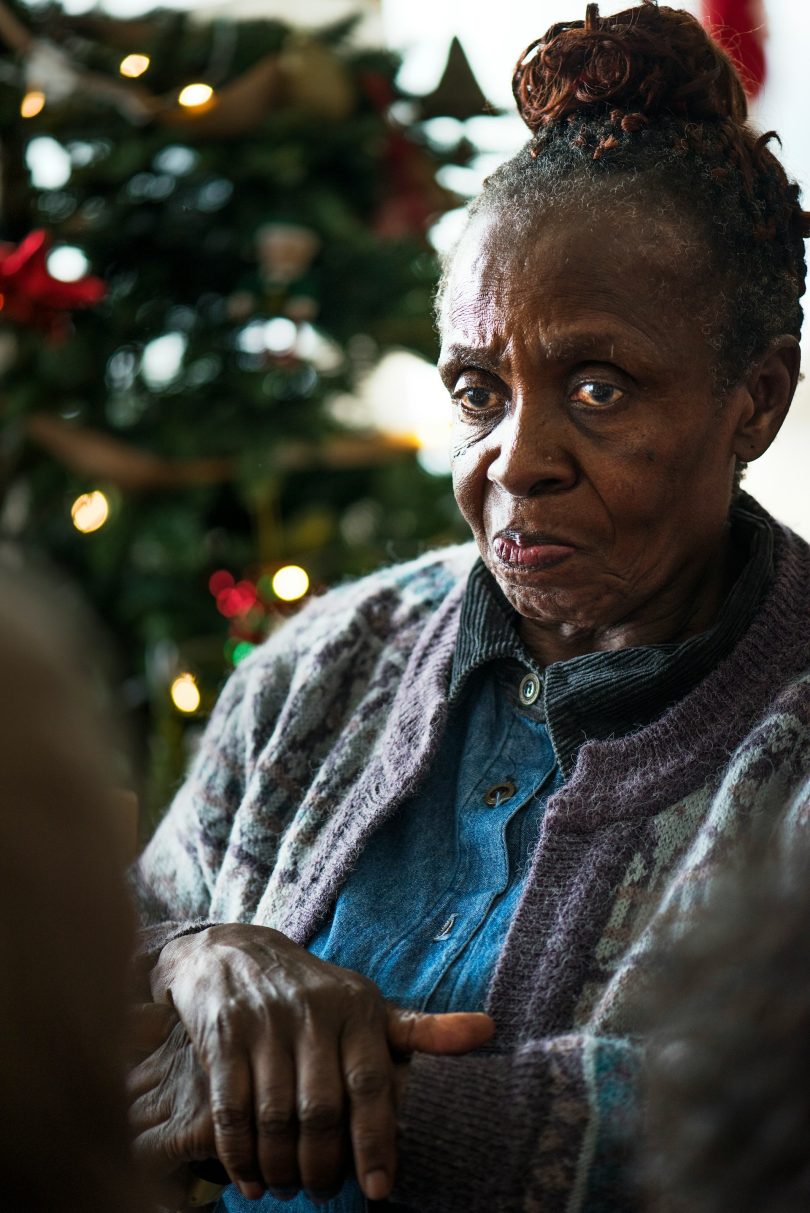

Most seniors express a strong personal preference for “aging in place”—remaining in their own homes and communities rather than moving to assisted living or nursing facilities. However, the urge is stronger among Black seniors for cultural reasons and the distrust of white-owned institutions.
Many Black seniors who try to live out this wish face severe obstacles linked to decades of housing discrimination and systemic socioeconomic inequalities. Moving into a residential care community is also often out of reach due to financial constraints.
For example, data from the CDC in 2022 shows that white seniors made up 92% of residents of a residential care community, while Black seniors accounted for just 2% of residents. The reason is often linked to cultural factors, socioeconomic barriers, and systemic resource disparities. This dilemma leaves Black seniors between a rock and a hard place.
Obstacles to Aging in Place in Our Community
A successful aging in place requires extensive planning that includes proactive home modifications, building robust support networks, and careful financial planning. Early preparation ensures you maintain safety and independence in your home. The major challenges Black seniors face are highlighted below.
Home Modifications
Black seniors face a long list of housing challenges, whether they want to purchase a new home or renovate an existing home. Many reside in older, deteriorating homes that lack modern safety modifications. Renovating and modernizing such homes with ramps, grab bars, stairlifts, and walk-in showers can cost anywhere from $10,000 to $25,000, which low-income Black seniors may not be able to afford. Another challenge is finding culturally representative contractors.
Historic redlining and modern housing appraisal disparities frequently undervalue Black-owned homes, which leaves seniors with less borrowing power for home renovation. Also, Black seniors are more likely to rent a house than own one during retirement, compared to their white peers due to systemic economic disadvantage. Renters have very little control over structural changes.
Although the Fair Housing Act (FHA) mandates private landlords to allow reasonable modifications, the financial burden falls on the tenant. Also, certain smaller landlords are exempt from FHA mandates, exposing seniors to unsafe living conditions and eviction threats if their physical needs change.
Support Network
Building a robust support network is particularly important for Black seniors because roughly 40% of our seniors live with a disability. Since our seniors experience chronic illnesses and mobility limitations earlier, they need highly personalized home alterations and racially-conscious caregivers.
Historic redlining has left a higher percentage of minority neighborhoods exposed to legacy pollutants, which can worsen chronic illnesses and reduce overall functional lifespan. These neighborhoods are often characterized by poor pharmacy access, shortage of home-care agencies, and lack of transit.
Research shows that Black seniors are much more likely to need daily help at home but often live without it. This is more so for those living in underfunded neighborhoods with isolated essential services—especially in instances where health declines rapidly, or complex conditions emerge early. Unfortunately, mainstream aging services, volunteer networks, and support groups are predominantly designed for and marketed to white demographics.
Financial Planning
Finding a caregiver who understands the racial and cultural needs of their patients is often difficult because of their smaller number and the racial wealth gap. Eventually, family members, often working multiple jobs, may have to step in as untrained and economically strained caregivers.
Black adult children are highly likely to be “sandwiched” between taking care of their children and aging parents on limited budgets. Without proper upfront financial planning, emotional and financial strain can lead to severe caregiver burnout, limiting the ability of the informal caregiver network to provide long-term care.
How Black Seniors Can Overcome Aging in Place Obstacles
Overcoming the obstacles to successful aging in place for Black seniors requires lengthy upfront planning, rather than making the decision close to retirement. Elevate Black Health recommends starting the preparation from your first paycheck. Having a retirement fund for caregiving and healthcare will lower the burden on your children.
To fund home modification, Black seniors can leverage government programs, non-profits, and specialized grants to bypass traditional high-interest loans. Good examples include:
- Rebuilding Together: This is a national non-profit network providing free home modifications and critical repairs for low-income seniors and veterans.
- USDA Section 504 Home Repair Program: Offers up to a $10,000 grant to low-income seniors living in rural areas to remove health and safety hazards from their homes.
- Older Americans Act (OAA) Funds: Local Area Agencies on Aging (AAA) regularly distribute federal funds to assist seniors in covering the cost of basic safety alterations like grab bars and ramps.
For the actual modification, seek out Certified Aging-in-Place Specialists (CAPS) through the National Association of Home Builders (NAHB). Trained in elder-accessible design, they can anticipate the kind of modifications that will be most useful to you. Alternatively, request an evaluation from an occupational therapist. They can write an official report detailing exactly what modifications are medically necessary. This prevents contractors from overcharging for unneeded renovations.
Aging-in-place can be a lonely experience without the right support network. Reaching out to local Black churches or civic groups can help Black seniors build emotional connections that help with both physical and mental wellbeing.
For More Reading
- Bailey, L. (2023, October 4). Aging in place: New study highlights racial disparities among older adults. Medical Xpress. https://medicalxpress.com/news/2023-10-aging-highlights-racial-disparities-older.html
- Emecheta, A. (2021, September 15). Fighting caregiver burnout with technology. Elevate Black Health. https://www.elevateblackhealth.com/fighting-caregiver-burnout-with-technology/
- Emecheta, A. (2022, May 10). Home safety measures: Tips to prevent lung cancer. Elevate Black Health. https://www.elevateblackhealth.com/home-safety-measures-tips-to-prevent-lung-cancer/
- Emecheta, A. (2023, July 12). Faith and spirituality in aging well. Elevate Black Health. https://www.elevateblackhealth.com/faith-and-spirituality-in-aging-well/
- Liu, Y., & Zhang, J. (2023). Health disparities in aging populations: A sociocultural perspective. Health and Social Care in the Community, 31(6), e4567–e4578. https://doi.org/10.1093/haschl/qxad041
- Melekin, A., Sengupta, M., & Caffrey, C. (2024, August). Residential care community resident characteristics: United States, 2022 (NCHS Data Brief No. 506). National Center for Health Statistics. https://doi.org/10.15620/cdc/158327